
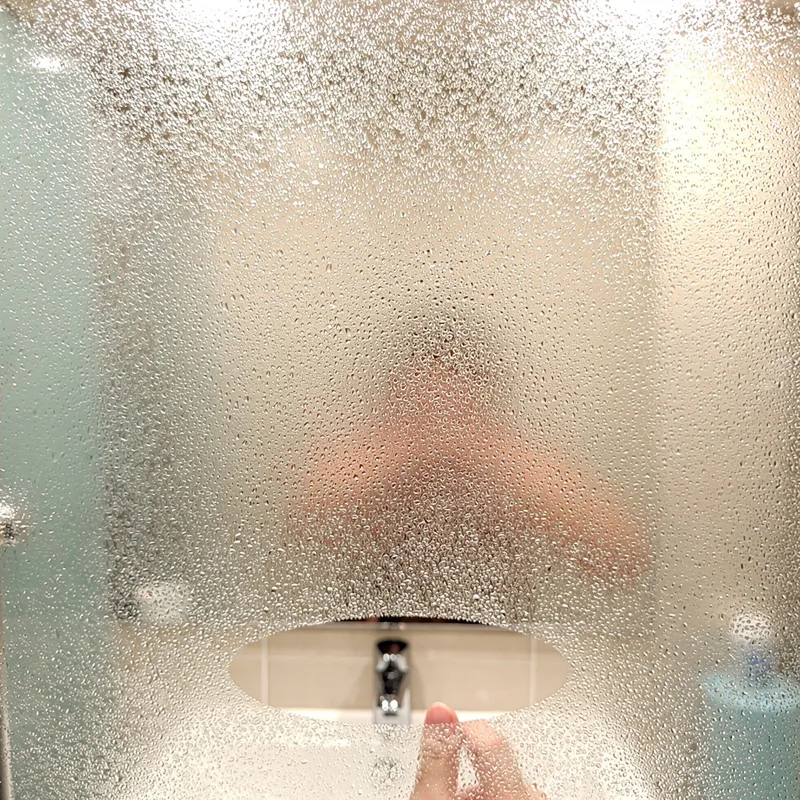
to fog up
 5
2.8
5
2.8

- phrasal verb
- /fɔg ʌp/
- The cold air from outside made the car windows fog up quickly.
- windows fog up
- glasses fogged up
- fogged-up mirror
Examples
-
She peers into the fogged-up bathroom mirror.
Fiction book (1998) -
It's so cold that my glasses are fogging up as soon as I get home.
-
It's making your windows fog up.
-
The windows were all fogged up.
-
The lenses of my glasses fogged up.
Fiction book (1998) -
The heater was on, but it was cold inside, and the windows fogged up right away.
Fiction book (1999) -
You're fogging up my glasses.
-
"Is it hot in here?" My glasses had fogged up, and I took them off to wipe them with my shirttail.
Fiction book (1991) -
She glanced away—anywhere, the floor, the fogged-up window—to keep from crying.
Fiction book (1999) -
Even on Sunday, Oct 14, when he finally made the jump, Baumgartner hit a small glitch prior to jumping when his helmet visor fogged up due to a broken heater.
Blog text (14)
Synonyms
 7
5.2
7
5.2
To make something hard to see or understand
 3
3.1
3
3.1
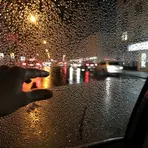
To become covered with fine drops that make something less clear
 1
4.7
1
4.7
To become cloudy and hard to see through

Become covered with a thin layer of water that makes glass or mirrors hard to see through

Look less clear as if covered by a thin mist
Antonyms

How Foggy

Surface Forms
Morphology
The meaning is directly derivable from combining 'fog' (to make less visible/cover with mist) with the particle 'up' indicating becoming/bringing into that state; the phrasal-verb composition straightforwardly yields 'become covered with condensation'. This is a common and literal motion/state phrasal pattern in English (and has clear equivalents in many languages), so a B1 learner who knows the parts would readily understand it.
Etymology
The verb fog up comes from the simple picture of tiny water drops on glass: warm breath or steam makes the glass look like a thin fog, and the drops build up on the surface. That 'fog' makes the glass 'hard to see', so to fog up means to become covered and unclear.