
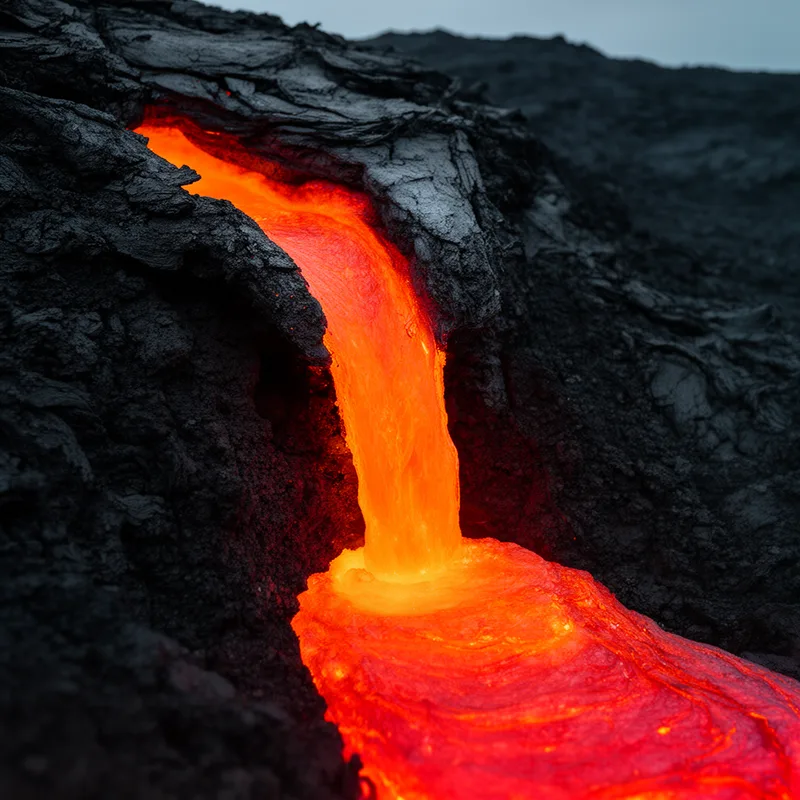
to flow out
 16
2.9
16
2.9

- phrasal verb
- Behind us, rush-hour traffic flowed out of the city like a river.
Loading YouTube…
Watch on YouTubeAnd the sewage flowed out all over the carpets.
- And the sewage flowed out all over the carpets.
- Here words are flowing out like in this rain, into a paper cup.
- They're calling liabilities assets and the cash is flowing out.
Examples
-
Immediately, the air began flowing out of the cabin into the vacuum of space.
Fiction book (2000) -
The eastern Gulf Coastal Plain includes large streams flowing out of the southern Appalachian Highlands.
Academic text (2012) -
Then he took a deep breath and let the fear flow out with it.
Fiction book (1991) -
Here words are flowing out like in this rain, into a paper cup.
-
Except now she was speaking German, and it came flowing out of her.
Fiction book (2002) -
But for most people, cash is flowing out, it's not flowing in.
-
Every day, ships of grain and gold flow out of our country to pay off the Romans.
Fiction book (1999) -
One has to ask how long the East Berlin government can hold on as the tide of loaded Trabants continues to flow out.
-
And they're going to just flow like water flows out of a faucet.
-
The coffee began to flow out of the pot and filled the cup slowly.
Synonyms
 588
1.0
588
1.0
To make liquid flow in a steady stream from a container
 364
2.7
364
2.7
To let color or liquid spread and make marks
 259
1.6
259
1.6
To move smoothly and continuously, like people or traffic
 198
1.0
198
1.0
To let liquid flow away from something
 55
1.7
55
1.7
To flow out in large amounts, like liquid or tears
 28
1.3
28
1.3
Water or other liquid flows out of a container by accident
 26
3.6
26
3.6
Move out of a place suddenly in large numbers or fall out of a container and spread
 26
3.2
26
3.2
To flow out suddenly and forcefully, like blood from a wound
 22
2.9
22
2.9
Make liquid flow out of a container
 15
5.9
15
5.9
To force out large amounts of something like smoke or words
 12
3.7
12
3.7
To leave a place quickly in large numbers
 9
3.7
9
3.7
To flow out quickly and forcefully in a strong stream
 7
3.1
7
3.1
To come out suddenly in a strong stream
 7
3.4
7
3.4
To flow slowly in small amounts through tiny holes
 4
6.5
4
6.5
Give off liquid slowly, often in drops
 4
4.2
4
4.2
Slowly flow out from a cut or crack in something
 3
3.0
3
3.0
To come out in a narrow strong stream of liquid or gas
 2
7.1
2
7.1
To flow out in large amounts
 1
3.2
1
3.2
Water moves away slowly in a steady stream


 1
3.7
1
3.7
The smooth movement of water or air
Moving outward in a steady stream from a source like water or gas

To flow out in large amounts, like tears or blood
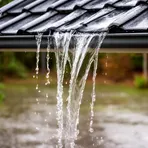
To move away from a surface in a steady stream, like water does

Giving off a lot of liquid, for example sweat or tears

To come out freely, as a liquid, gas, or light

Slowly leaking thick, sticky liquid

Flowing out quickly and in large amounts
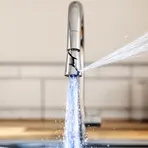
To force liquid out quickly in a narrow stream, like blood or water
How Fast
26
3.2
 26
3.6
22
2.9
16
2.9
212
1.0
82
2.7
26
3.6
22
2.9
16
2.9
212
1.0
82
2.7
Surface Forms
Morphology
The meaning 'to move or spill outward in a continuous stream' is directly and transparently derivable from combining 'flow' (to move steadily in a stream) with 'out' (away from the interior). This verb + particle composition is a common, cross-linguistic motion pattern in English, so a B1 learner who knows both constituents will readily infer the MWE meaning.
Etymology
Flow out comes from a simple image: something liquid flows, moving in a smooth stream, and goes out of a container or place. So when something flows out, it means 'to move or spill outward', like lava leaving a crater or tears leaving the eyes.