
first harmonic
- noun
- /fɜrst hɑːrˈmɒnɪk/
- Specialized
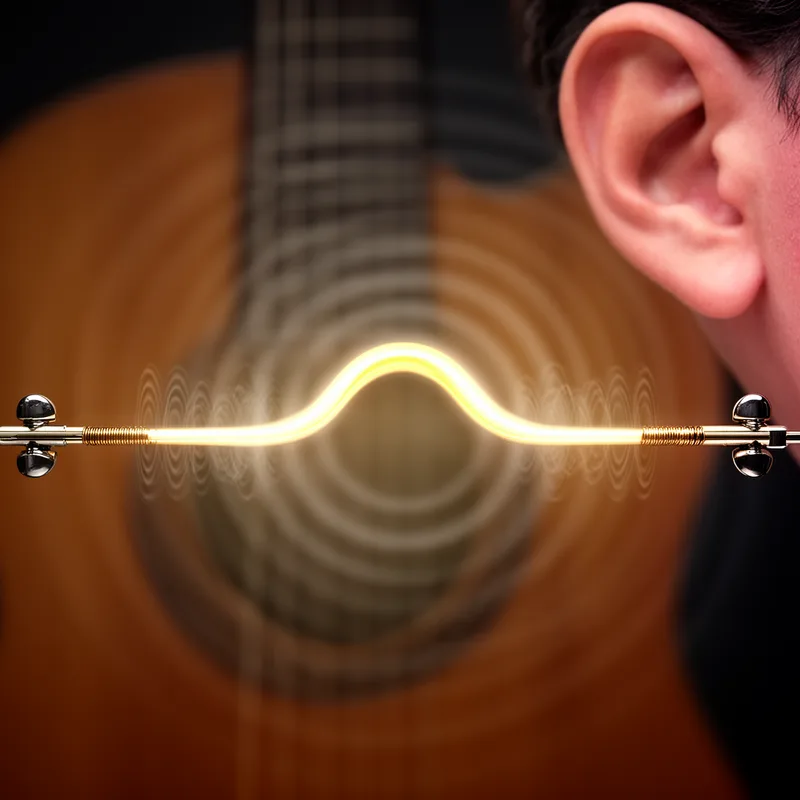
- In a harmonic series, the first harmonic corresponds to the fundamental frequency of the note played.
Examples
-
Indeed, most pulsating stars are observed to pulsate in the fundamental or in the first harmonic, and some stars pulsate in both.
Academic text (1991) -
So this is maybe the first harmonic, the second harmonic, the third harmonic.
-
So, Raj, if you can play us the first harmonic and then the open string, right?
-
It's going to consist of a A, a first harmonic and then the second harmonic and the third harmonic and so on.
-
When tuning their instruments, musicians often start with the first harmonic to ensure they are in tune.
-
The first harmonic produces a sound that is pleasing to the ear and serves as the foundation for other frequencies.
Synonyms


 1
4.9
1
4.9
The lowest note a sound makes that decides its pitch
 1
7.9
1
7.9
The lowest tone in a sound that gives the pitch
How High
- Specialized
3
6.7

- Specialized
Surface Forms
Morphology
The meaning is directly compositional: 'first' + 'harmonic' denotes the first item in a harmonic series (the fundamental). This is a standard, non-idiomatic technical composition used similarly across languages in music/physics, so a B1 learner who knows both words should be able to derive the intended meaning.
Etymology
The term first harmonic comes from the image of a vibrating string. The first and lowest harmonic is the main, strongest tone the string makes, so first harmonic means the 'basic tone' or 'fundamental frequency' that gives a note its pitch.