

to filtrate
- verb
- /ˈfɪl.treɪt/
- Specialized
- She used a coffee filter to filtrate the liquid before serving.
Examples
-
Rivers also partially filtrate and feed existing springs from where people take water as well.
Academic text (2017) -
The laboratory technician will filtrate the solution to remove any impurities.
-
I'm gonna personally ex-filtrate you.
-
Tank back-washing uses clean filtrate from the adjacent tanks.
Academic text (1998) -
Therefore, any metals detected in the UF filtrate should be ions.
Academic text (2013) -
We prepared a composite sample of filtrate for each NP per water type per filtration method by collecting filtrate for 15 seconds at 1, 5, 30, 60, 90, and 120 minutes.
Academic text (2013) -
Due to suspended particulates and dissolved metals in filtrate from dewatered sediment, filtrate settling tanks, sand filters, and an ion exchange unit to the treatment train were all added.
Academic text (1997) -
To ensure purity, we must filtrate the water before it enters the reservoir.
Synonyms

 138
3.0
138
3.0

To pass something through a device that removes unwanted parts
 41
3.9
41
3.9
Remove unwanted parts from a material to make it pure
 30
4.6
30
4.6
To remove dirt and bad chemicals from water or air to make them clean
 26
3.7
26
3.7
To remove solid bits from a liquid using a filter or sieve
 20
3.8
20
3.8
To remove unwanted things from water, air, or lists by letting the rest pass
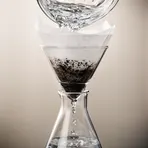 7
3.7
7
3.7
Remove one part from a mixture using a filter or another method
 7
8.2
7
8.2
Pass a liquid through a sieve to remove solids
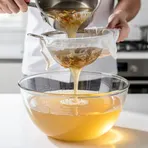 5
4.2
5
4.2
To remove solid bits so a liquid becomes clear
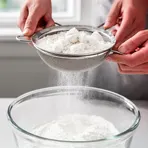 1
5.8
1
5.8
Pass a powder or liquid through fine mesh to remove lumps
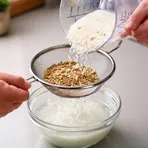

 1
5.3
1
5.3
Remove unwanted bits from food or material by passing them through a screen

Removes harmful or unwanted substances to make something clean
Antonyms

How Filtered
30
4.6

- Specialized
5
4.2
- Specialized
138
3.0
26
3.7
12
2.5
Surface Forms
Morphology
Etymology
Filtrate comes from filter, a word that once meant a piece of cloth used to strain liquids. So to filtrate is to pass a liquid or gas through a filter to 'remove' or 'separate' the solid or unwanted parts.