
ferroelectric material
- noun
- /ˌfɛroʊɪˈlɛktrɪk məˈtɪriəl/
- Specialized
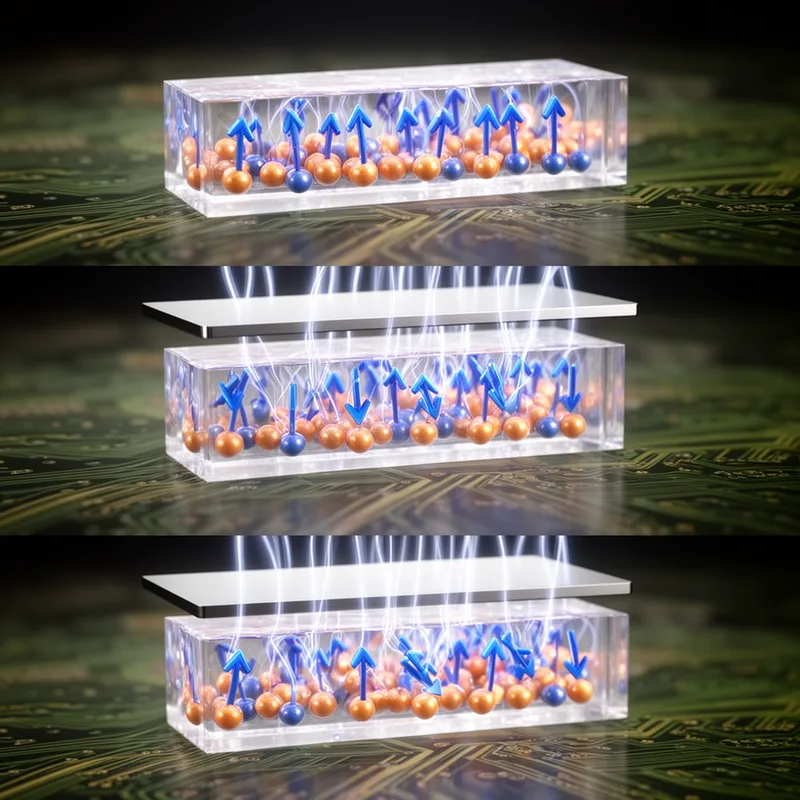
- A ferroelectric material can retain its polarization after the electric field is removed.
Examples
-
Research on ferroelectric material has led to advances in non-volatile memory devices.
-
A ferroelectric material can retain its polarization state after the external field is removed.
-
Engineers use ferroelectric materials in sensors and actuators due to their unique electrical properties.
-
Many ferroelectric materials are used in capacitors and sensors.
-
Barium titanate is an important ferroelectric material used in various electronic devices.
-
Many researchers are exploring new applications for ferroelectric materials in energy storage technologies.
-
The unique properties of ferroelectric materials allow them to switch their polarization when exposed to an electric field.
Synonyms

A material or device with an electric charge direction that can be reversed by an electric field
Surface Forms
Morphology
The phrase is a straightforward adjective + noun composition: if a learner knows 'ferroelectric' (a material that retains polarization) and 'material', they can directly infer 'ferroelectric material' as a material with that property. This is a regular compositional pattern (property adjective modifying a noun) and is therefore transparently interpretable.
Etymology
The term ferroelectric material mixes ferro- (a word meaning 'iron') and electric because early scientists saw its electric behavior as 'like a magnet', not because it contains iron. These materials keep an electric direction on their own and that direction can be changed by an electric field, so the name helps you remember they 'hold' and 'switch' an electric state.

