

false dogwood
- noun
- US
- The fruit of the false dogwood was once used as a natural soap by indigenous peoples.
Examples
-
In tropical America, the false dogwood produces small red berries that are rich in saponin.
-
A tall false dogwood grew in the corner of the botanical garden, its branches heavy with red berries.
-
Researchers are studying the potential medicinal uses of compounds extracted from false dogwood.
-
The false dogwood is native to tropical regions.
-
Many gardeners appreciate the false dogwood for its unique fruit.
-
Historically, Native Americans used the bark of the false dogwood to make a natural soap.
-
The false dogwood thrives in warm climates and is known for its glossy, evergreen leaves.
Synonyms

An evergreen tree from tropical America with fruit used as a natural soap

A tropical evergreen tree whose fruit's soft inside people use as soap

An evergreen tree with soft fruit used as natural soap

A tree or its fruit from warm countries that people use as natural soap
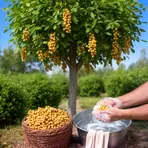
A tree that makes berries used as natural soap
Surface Forms
Morphology
The compound follows a regular adjective + noun pattern where 'false' signals imitation or resemblance, so a learner who knows 'false' and 'dogwood' can infer it is a plant that looks like or is not a true dogwood. This compositional naming pattern is common in English (and mirrored in many languages for plant names), so the meaning is readily derivable for a B1 learner.
Etymology
False dogwood comes from the idea that the shrub looks like a true dogwood but the word false shows it is not the same. Its pulpy fruit was once used by Native Americans as a natural 'soap', so the name helps people remember this particular shrub, not the real dogwood.

