

false bittersweet
- noun
- /fɔls ˈbɪtərˌswit/
- US
- We spotted a false bittersweet plant during our hike.
Examples
-
The false bittersweet grows abundantly in the woods.
-
Gardeners are warned not to confuse false bittersweet with its toxic relatives.
-
False bittersweet climbs over fences and shrubs, adding splashes of yellow and red in the fall.
-
The berries of false bittersweet are brightly colored and easily spotted in the autumn woods.
-
False bittersweet climbs over fences and shrubs, adding splashes of yellow and red in the fall.
-
Gardeners are warned not to confuse false bittersweet with its toxic relatives.
-
The berries of false bittersweet are brightly colored and easily spotted in the autumn woods.
Synonyms

A climbing shrub from North America with yellow seed pods that show red seeds
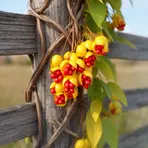
A climbing North American bush with yellow pods that show bright red seeds
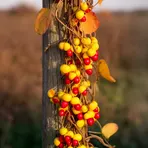
A climbing plant with yellow pods that show bright red seeds in the fall
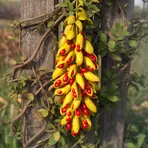
A climbing North American shrub with yellow pods and red seeds
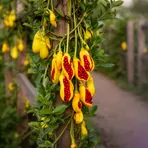
A climbing shrub with yellow seed pods that show bright red seeds
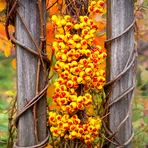
A climbing plant from North America with yellow pods holding bright red seeds used for decoration
Surface Forms
Morphology
The compound is transparently built from 'false' (not genuine, imitation) + 'bittersweet' (a vine/shrub), so a learner who knows both words can infer this refers to a plant similar to but not the true bittersweet. Botanical details (yellow capsules, scarlet seeds) are specific and not predictable, but the basic sense 'a non‑true or lookalike bittersweet' is directly derivable and cross‑linguistically familiar.
Etymology
False bittersweet gets its name from the plant's look: it climbs and has yellow pods that split open to show bright red seeds. People added false because it looks like the true bittersweet but is a different plant, so the name warns you and tells you it's a climbing shrub with yellow pods and red seeds.

