

Celastrus scandens
- noun
- Specialized
- In the fall, the Celastrus scandens displays vibrant yellow capsules that burst open to reveal scarlet seeds.
Examples
-
Many birds feed on the seeds of Celastrus scandens during the winter months.
-
The Celastrus scandens vine can grow rapidly in the right conditions.
-
Celastrus scandens is prized by gardeners for its colorful berries and climbing habit.
-
The conservation group warned that Celastrus scandens could be threatened by habitat loss.
-
Have you seen the beautiful Celastrus scandens in the garden?
-
The bright red seeds of Celastrus scandens attract many species of birds.
-
People often use Celastrus scandens in landscaping due to its ability to climb trellises and fences.
Synonyms
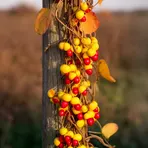
A climbing plant with yellow pods that show bright red seeds in the fall
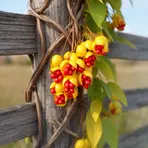
A climbing North American bush with yellow pods that show bright red seeds
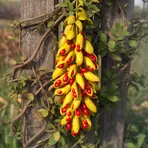
A climbing North American shrub with yellow pods and red seeds
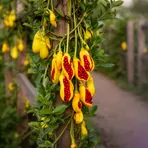
A climbing shrub with yellow seed pods that show bright red seeds
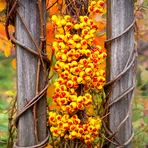
A climbing plant from North America with yellow pods holding bright red seeds used for decoration

A climbing bush from North America with small yellow pods holding bright red seeds
Surface Forms
Morphology
Celastrus + scandens
This is a botanical Latin binomial: 'Celastrus' is a formal genus name and 'scandens' is a Latin epithet (literally 'climbing') that is not part of ordinary English vocabulary. An average B1 learner who only knows the listed constituents would not be able to derive the meaning 'twining/climbing shrub' without knowledge of Latin or botanical naming conventions, so the expression is opaque to them.
Etymology
Celastrus scandens gets its name from Latin words that describe the plant: scandens means 'climbing', because the shrub climbs up trees and fences. Its yellow capsules open to show bright red seeds, a striking picture that led people to call it 'American bittersweet', so the name fits the plant you see today.

