
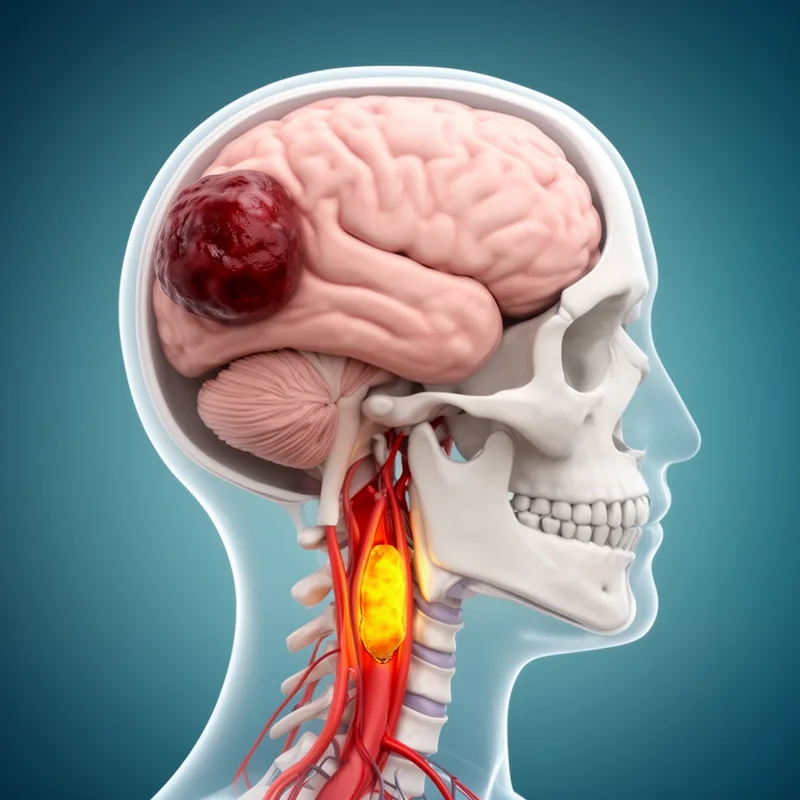
extracranial
- adjective
- /ˌɛkstrəˈkreɪniəl/
- Specialized
- In this article, we report a new case of CSF otorrhea and CSOM in a patient with multiple intra- and extracranial complications.
- extracranial portion
- intra- and extracranial
Examples
-
This discussion includes information on the development of only the extracranial portions of the facial nerve.
Academic text (2003) -
Extracranial schwannomas are rare and can be mistaken for metastatic disease or other non-neurogenic tumors.
Academic text (1996) -
Seniors prescribed the drug are likely to develop extracranial bleeding symptoms.
Blog text (6) -
B: The common patterns of branching of the extracranial portion of the facial nerve are illustrated.
Academic text (2003) -
After years of debate, carotid endarterectomy is considered the standard procedure for extracranial occlusive disease.
Academic text (2007) -
While extracranial NMCs are more common in children, 16 of the 18 cases of intracranial NMCs occurred in adults.
Academic text (2004) -
The surgeon focused on the extracranial areas while conducting the operation.
-
After the accident, the doctor noted significant extracranial injuries requiring immediate attention.
-
To better understand the condition, he studied the extracranial blood vessels during the anatomy lecture.
Synonyms

Relating to the area around the bones of the head
Antonyms


How Deep

Surface Forms
Morphology
Etymology
Extracranial is made of extra- 'outside' and cranial from cranium 'skull', so it describes something that is 'located outside the skull'.