
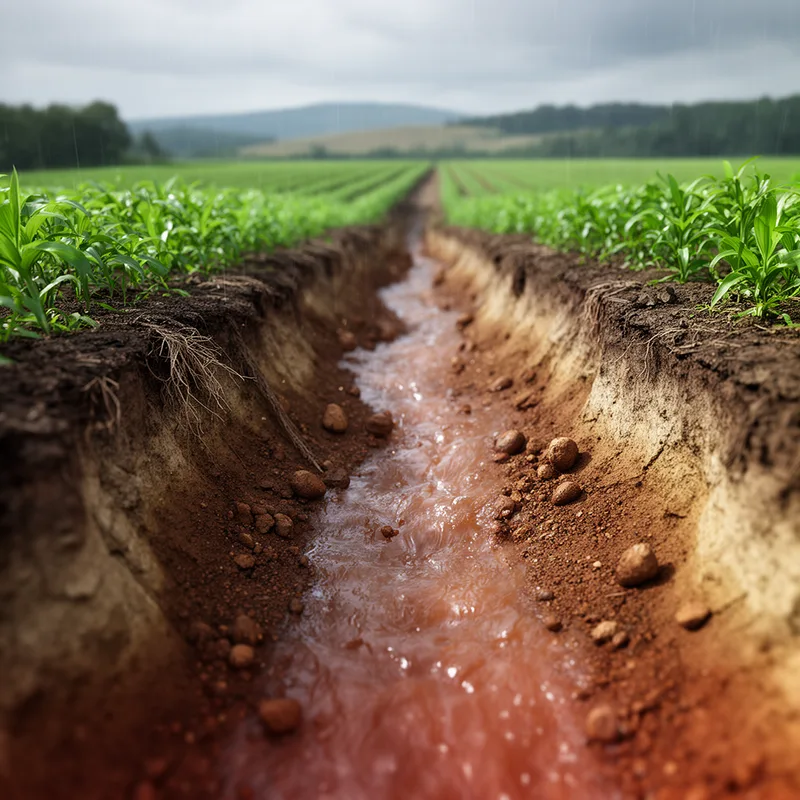
erosiveness
- noun
- /ɪˈroʊsɪvnəs/
- Scientists measure the erosiveness of different soil types to understand their vulnerability to rainfall.
Examples
-
Reducing the erosiveness of water runoff is essential for protecting agricultural land from degradation.
-
The erosiveness of ocean waves has dramatically altered the coastline over the past century.
-
The erosiveness of the acid affected the metal.
-
High levels of rainfall increase the erosiveness of the soil.
-
Reducing the erosiveness of water runoff is essential for protecting agricultural land from degradation.
-
The erosiveness of ocean waves has dramatically altered the coastline over the past century.
-
High levels of rainfall increase the erosiveness of the soil.
Synonyms


 1
7.4
Slow wearing away of a surface by rubbing or natural forces
 1
5.1
Slow loss of a surface by water, wind, or rubbing

A slow wearing away of a surface when something rubs it
Antonyms

How Erosive

Surface Forms
Morphology
Etymology
Erosiveness comes from the verb erode, which comes from an old Latin root rodere meaning 'to gnaw'. Picture water or wind 'gnawing' at soil or rock like a small animal, and that's why erosiveness is the power to wear things away over time.