
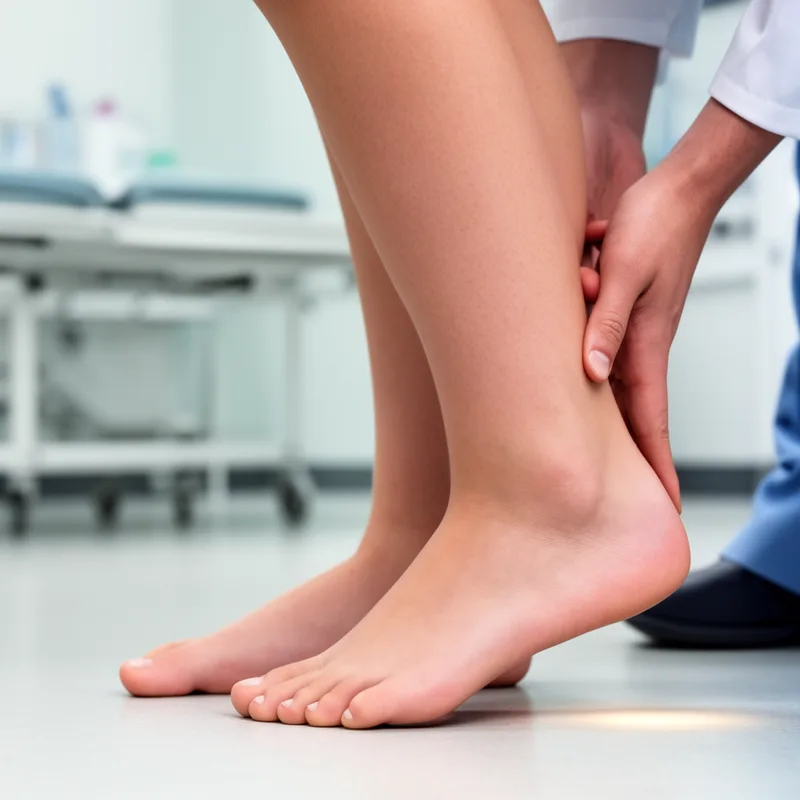
equinus
- noun
- /ˈɛkwɪnəs/
- Specialized
- Patients with equinus often experience difficulty walking due to their foot being fixed in a downward position.
- severe equinus
- cord equinus
- heel cord equinus
Examples
-
Metatarsus adductus differs from a clubfoot in that the heel or hindfoot is not in equinus.
Academic text (2005) -
A clubfoot can easily be differentiated from metatarsus adductus by the hindfoot equinus.
Academic text (2005) -
This is easily done by viewing the hindfoot, which is in severe equinus in a foot with congenital vertical talus.
Academic text (2005) -
Equinus contracture has been associated with increased plantar pressure and ulceration (1).
Academic text (2001) -
Correction of equinus is not attempted until the foot can be fully abducted on the talus past neutral (Ponseti, 1996).
Academic text (2005) -
This foot deformity is distinguished by the rocker-bottom or convex appearance of the sole combined with severe heel cord equinus.
Academic text (2005) -
The forefoot adduction and hindfoot varus arc corrected before starting any correction of the heel cord equinus.
Academic text (2005) -
The dorsiflexion view shows the fixed equinus of the hindfoot, and the plantarflexion view confirms the dislocation of the talonavicular joint (Jackson & Striker, 2003).
Academic text (2005) -
Physical therapy is crucial for managing equinus, as it helps improve foot mobility and reduce discomfort.
-
Children born with equinus may require corrective shoes to support proper foot alignment during growth.
Synonyms
A foot problem where the toes point down and the heel cannot touch the ground
Compounds
- Specialized
A foot problem where the toes point down and the heel cannot touch the ground
Surface Forms
Morphology
Etymology
Equinus comes from the Latin equus, meaning 'horse', because the foot points down like a horse's hoof and the heel cannot touch the ground. So the name helps you remember that this condition makes the foot stay in a downward, hoof-like position.

