
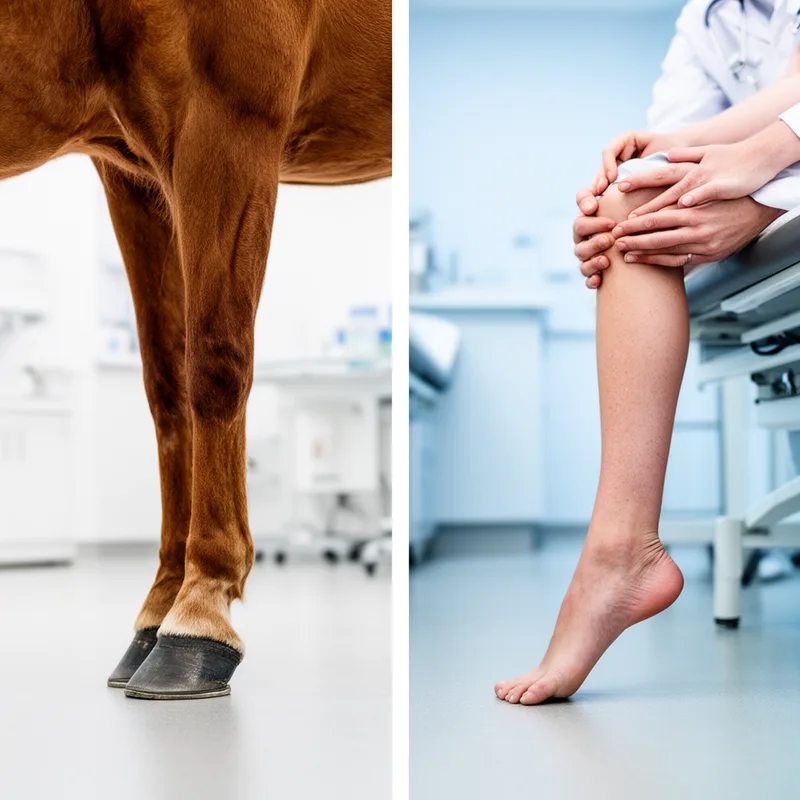
equinus
- adjective
- /ˈɛkwɪnəs/
- Specialized
- Physical therapy was recommended to treat the equinus deformity in her ankle.
Examples
-
An equinus gait can make walking difficult for some patients.
-
The doctor noted an equinus position of the patient's foot during the examination.
-
The patient has an equinus deformity in the foot.
-
Children with equinus may experience difficulty walking.
-
During the examination, the doctor observed an equinus position of the patient's foot, which indicates a deformity.
-
To improve her mobility, the physical therapist focused on correcting the equinus deformity in her ankle.
-
Patients with an equinus gait often find it challenging to walk normally due to the position of their feet.
Synonyms

 9
6.6
9
6.6

Relating to horses and animals like them


 1
6.0
1
6.0
Looking or behaving like a horse

Having the shape or movement of a horse
Compounds
- Specialized
A foot problem where the toes point down and the heel cannot touch the ground
Surface Forms
Morphology
Etymology
Equinus comes from the Latin equus, which means 'horse', and shares the same root as equine. In medicine it describes something that looks 'horse-like' in shape or position, for example a foot posture that resembles a horse's hoof, so the word explains why doctors call certain deformities 'equinus'.