

epitope
 1
9.9
1
9.9

- noun
- /ˈɛpɪˌtoʊp/
- Specialized
- Monoclonal antibody 4509 inhibits TF activity, and 4503 recognizes a non-functional epitope of TF.
- T-cell epitopes
- CTL epitopes
- helper epitopes
Loading YouTube…
Watch on YouTubeThis is now to use these single nanobody fusions that are dependent upon the presence of epitope and to use them as detectors.
- This is now to use these single nanobody fusions that are dependent upon the presence of epitope and to use them as detectors.
Examples
-
In addition, gastric and colorectal tumors present high levels of SLeA and SLeX as terminal epitopes of protein O-glycans, but also of N-glycans and glycolipids.
Academic text (2016) -
Further study would be required to determine what epitopes or components of SPf66 are responsible for inducing allergic reactions.
Academic text (2000) -
Now, most of the B cells in the body will not have an epitope that she recognizes.
-
The nature and extent of epitope variation in M. tuberculosis strains is unclear.
Academic text (2013) -
Neo-antigens might induce antibody-targetable epitopes, but whether this is the case is unclear.
Academic text (2017) -
The HIV envelope glycoprotein includes several potent antigenic epitopes capable of eliciting a proliferative response from T cells, even on primary exposure.
Academic text (1992) -
Researchers have identified specific epitopes on the virus that trigger strong immune responses.
-
The vaccine was designed to target multiple epitopes of the pathogen to enhance its effectiveness.
-
By studying the epitopes that bind to antibodies, scientists can develop better treatments for infections.
Synonyms


 1
9.8
1
9.8
The part of an antigen that an antibody binds to
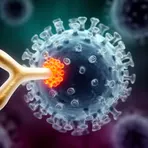
The small part of a germ or protein that an antibody sticks to
Surface Forms
Etymology
The word epitope comes from Greek parts epi- 'on' and -topos 'place'. You can see epi- in familiar words like epidermis, where it means 'on' the skin. So an epitope is the small 'place on' an antigen or protein where an antibody can attach.