

elevated railroad
- noun
- /ˈɛlɪˌveɪtɪd ˈreɪlroʊd/
- US
- The city's new elevated railroad line connects several neighborhoods without interrupting the flow of cars below.
Examples
-
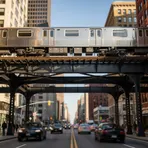
The elevated railroad glided smoothly above the busy streets, providing a unique view of the city.
-
Bloomingdale (no relation to the store) was what much of the Upper West Side used to be called: a collection of farms and villages that persisted until the construction of the elevated railroad in the late 19th century.
Blog text (9) -
The unit opened the door for discussion of critical transportation issues such as car safety, alternative fuels, alternative means of transportation (subways, monorails, elevated railroads, buses), highway construction, etc.
Academic text (2010) -
Once an elevated railroad track, the High Line is a 30-foot-high urban park featuring outdoor art installations, outdoor cafes, colorful gardens, recreational lawns, and views of the city from the West Side's Meatpacking District to the artsy Chelsea area.
Blog text (11) -
In many cities, an elevated railroad helps to reduce traffic congestion by transporting passengers above street level.
Synonyms
 1
8.6
1
8.6

A train that runs on tracks above the street in a city
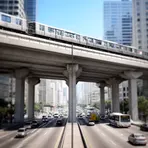
A train line that runs on tracks raised above the street, often in cities

A railway that runs on raised tracks above the street

A train line that runs on tracks high above the street
How High

Surface Forms
Morphology
The meaning is directly and transparently derived from combining 'elevated' (built higher than the surroundings) with 'railroad' (a railway): it denotes a railway built above street level. This compositional adjective + noun pattern is literal and common cross-linguistically, so a B1 learner who knows both words will readily infer the MWE's meaning.
Etymology
Elevated railroad comes from the clear image of a railroad built on tall supports so it is elevated above the street. Trains run on tracks held up by posts while people and cars move below, so the phrase means a 'train line above street level'.