
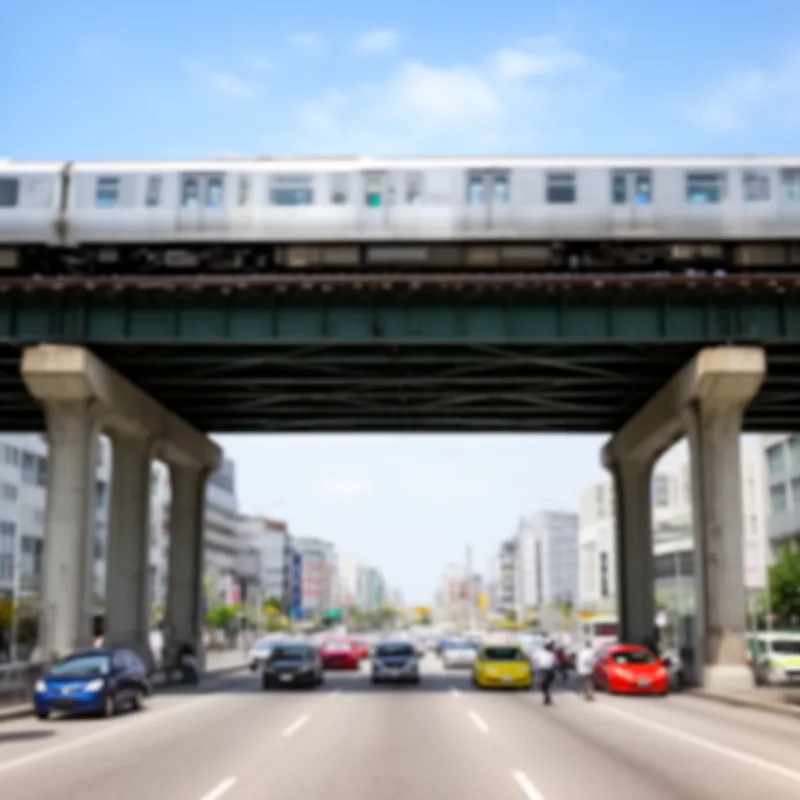
overhead railway
- noun
- /ˈoʊvərˌhɛd ˈreɪlˌweɪ/
- The city installed its first overhead railway in the early 20th century to ease traffic congestion.
Examples
-
Tourists enjoy riding the old overhead railway for its unique views of the city skyline.
-
As we drove below the overhead railway, the train rumbled loudly above us.
-
The overhead railway is amazing!
-
Look at the overhead railway!
-
The city installed its first overhead railway in the early 20th century to ease traffic congestion.
-
Tourists enjoy riding the old overhead railway for its unique views of the city skyline.
-
As we drove below the overhead railway, the train rumbled loudly above us.
Synonyms
 1
8.6
1
8.6

A train that runs on tracks above the street in a city

A train line that runs on tracks raised above the street, often in cities

A railway that runs on raised tracks above the street

A raised track where electric trains run above the street on metal columns
Surface Forms
Morphology
The meaning 'a railway elevated above street level' is directly and transparently derived from combining 'overhead' (positioned above) with 'railway' (train tracks). This is a regular adjective + noun composition with a clear spatial interpretation found across languages, so a B1 learner who knows both words will readily infer the meaning.
Etymology
Overhead railway comes from the simple picture of a train running on tracks high above the street. The word overhead means 'above the head' and railway means a train track, so the phrase describes a raised, often electric, train line that runs 'above the street'.