
duro


 1
9.9
- noun
- Now, some sixty years later, Benina needs to obtain from her (Jewish) financier the sum of one whole duro.
Examples
-
When they finally made it to Texas, they had been in the Palo Duro Canyon area.
Blog text (6) -
An important question upon which both duros and blandos agreed was the need for stable civilian control in the Assembly.
Academic text (1991) -
They can mean dark, menacing ("oscuro") and difficult to understand, threatening, striking fear into the observing subject ("duro").
Academic text (1991) -
The pun on the economic and sexual meaning of "duros" inevitably hints at a potentially meretricious turn to the relationship between the page and the gypsy girl.
Academic text (1994) -
I remember we used to put him on offense at tight end sometimes and had two 97-yard touchdowns in a row in one game," Steve Parr, Hood's coach at Palo Duro High School in Amarillo, said.
Blog text (17) -
Coronado and his expedition celebrated the first Thanksgiving in Palo Duro Canyon in May 1541—80 years before the Pilgrims.
Blog text (6) -
In the 19th century, a traveler could expect to pay fifty duros for a comfortable room in a hotel.
-
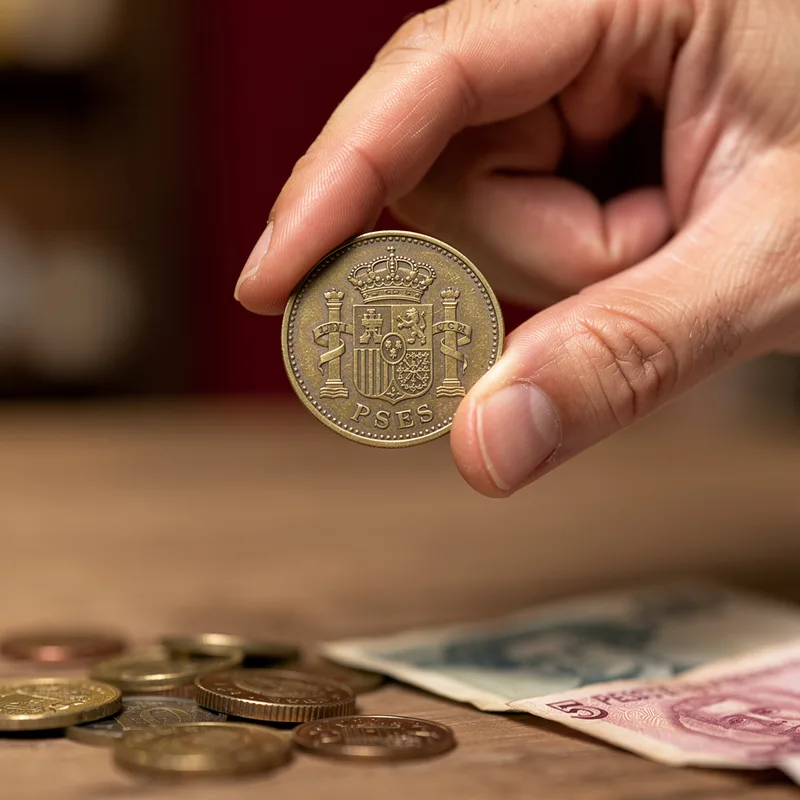
The antique shop displayed a beautiful collection of old coins, including a shiny duro from Spain.
-
He proudly showed off his grandfather's silver duro, which was minted long before the euro was introduced.
Synonyms
 6
8.9
Old Spanish money replaced by the euro in 2002
 1
6.6
Money that people used in Spain before the euro
 1
9.9
A former Portuguese unit of money equal to 100 centavos used before the euro
 1
8.6
Money Portugal used before the euro, equal to 100 centavos
Surface Forms
Etymology
The word duro comes from Spanish duro meaning 'hard' and from Latin durus which also means 'hard'. Think of English durable to remember this: a 'hard', solid coin was called a duro, and that's why the name stuck for the five-peseta coin.