
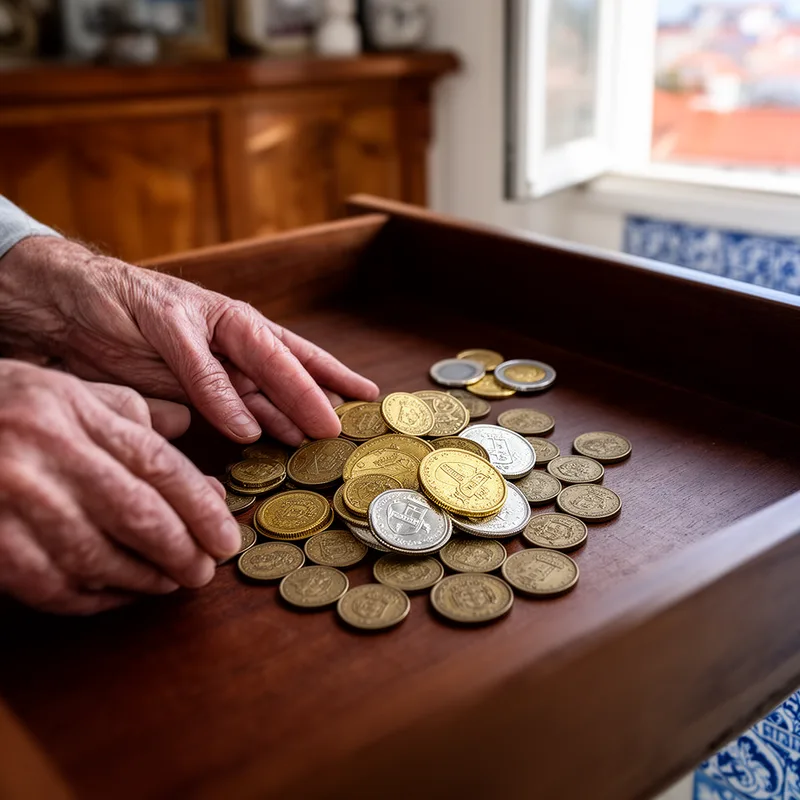
escudo


 1
9.9
1
9.9
- noun
- /ɛsˈkuːdoʊ/
- Although at least two multinational banks recently have taken action to install backup systems for the Greek drachma, the Portuguese escudo, the Italian lira, and other European currencies traded in the market to re-prepare.
- Portuguese escudo
Examples
-
Italy and Britain left the European Monetary System without committing themselves to a return date; all three currencies, as well as the Portuguese escudo, were officially devalued.
Academic text (1993) -
When the last banknotes of the Portuguese escudo were exchanged for euros, many people recalled its long history as the country's currency.
-
At the beginning of this month, Portugal decided to join its currency, the escudo, to the European Monetary System.
Academic text (1991) -
Disturbingly for a theory based on sophisticated expectations formation by financial markets, Portugal and Ireland were able to claim with some credibility that investors failed to distinguish between the escudo and peseta and between the punt and pound.
Academic text (2003) -
In 2002, Portugal officially replaced the escudo with the euro, marking a significant change in its monetary system.
-
The value of the escudo fluctuated significantly before it was phased out in favor of the euro.
Synonyms
Money Portugal used before the euro, equal to 100 centavos
Compounds

Surface Forms
Etymology
Escudo comes from the Latin word scutum, which means 'shield', because old coins often showed a shield on them. So the name became the word for Portugal's coin and was used as the country's money until it was replaced by the euro in 2002.