

duck-billed dinosaur


 1
7.4
1
7.4
- noun
- /dʌkˈbɪld ˈdaɪnəsɔr/
- The duck-billed dinosaur hadrosaurus was known for its distinctive flat bill, which helped it graze on plants.
Examples
-
During the late Cretaceous period, duck-billed dinosaurs roamed the Earth, thriving in herds to feed on lush vegetation.
-
Now, this little fellow is Camptosaurus Marsh, a primitive duck billed dinosaur.
-
Parasaurolophus (Duck-billed dinosaur) Pentaceratops (
Blog text (2) -
In one run, Tyrannosaurus might eat only Triceratops, while in another it eats only duck-billed dinosaurs, and in a third it might eat a more varied diet.
Blog text (21) -
Now two ranchers have asked him to return the duck-billed dinosaur remains he uncovered on their property, although they had originally agreed that the fossils would reside in the museum.
Academic text (1998) -
In 1905, no one had yet found any for a Triceratops, so Boss and Gilmore substituted those from a duck-billed dinosaur, which was the right size but of a different sort altogether.
Academic text (2000) -
For instance, when Horner excavated a nesting site of duck-billed dinosaurs at Montana's Egg Mountain, he collected every fragment of nest, eggshell, and baby.
Academic text (1998) -
Paleontologists discovered a nearly complete skeleton of a duck-billed dinosaur in a remote area of Montana.
Synonyms
 1
9.9
1
9.9
A large plant-eating dinosaur with a duck-like bill and often a bony crest
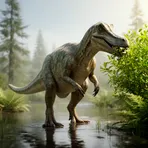
A large plant-eating dinosaur with a duck-like beak that walked on two legs

A large dinosaur with a beak like a duck that lived in North America long ago
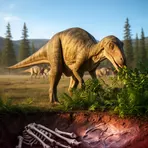
A large plant-eating dinosaur with a flat beak that lived in western North America and left many fossils
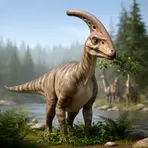
A large plant-eating dinosaur with a tall hollow crest on its head
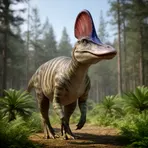
A large duck-billed dinosaur with a tall crest on its head
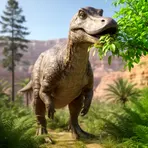
A large plant-eating dinosaur with a flat duck-like bill from the Cretaceous period

An old name used by scientists for a large duck-billed dinosaur
Surface Forms
Morphology
duck-billed + dinosaur
The phrase is compositionally built: 'duck-billed' means 'having a bill like a duck' and combined with 'dinosaur' yields 'a dinosaur with a duck-like bill.' This adjective+noun composition follows regular English formation and is cross-linguistically transparent, so a B1 learner who knows 'duck', 'bill', and 'dinosaur' can reliably infer the meaning.
Etymology
Duck-billed dinosaur gets its name from the dinosaur's flat, wide mouth that looks like a duck's bill. So people call these plant-eating giants 'a large plant-eating dinosaur with a duck-like beak'.