
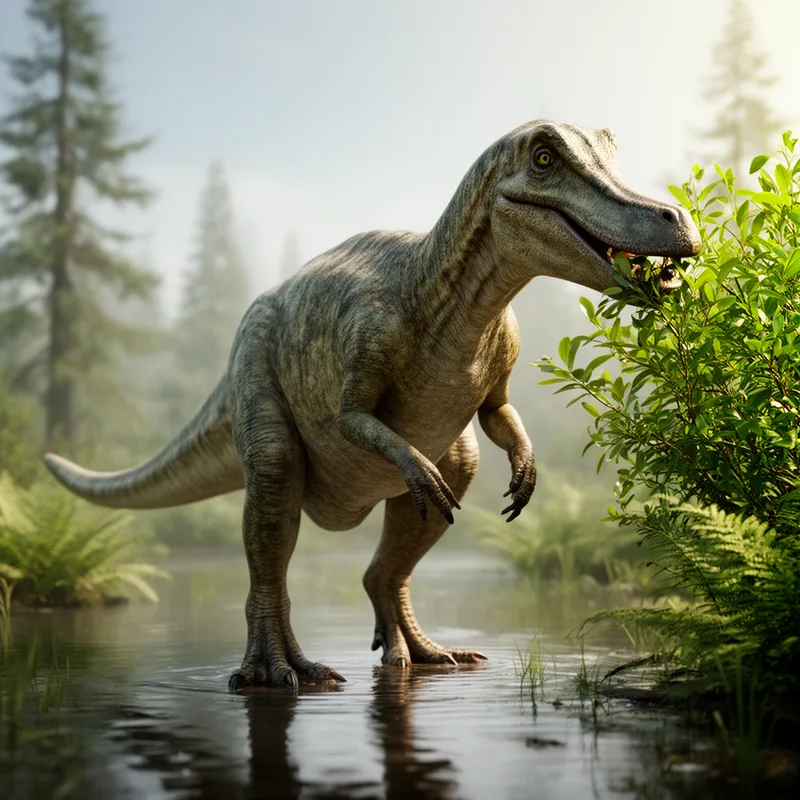
hadrosaurus
- noun
- /ˌhædrəˈsɔrəs/
- The documentary depicted a hadrosaurus grazing near a riverbank, highlighting its adaptation to a semi-aquatic lifestyle.
Examples
-
The embryos were arranged by species: Stegosaurus, Apatosaurus, Hadrosaurus, Tyrannosaurus.
Fiction book (1990) -
The paleontologist explained that hadrosaurus were large, duck-billed dinosaurs that roamed the Earth millions of years ago.
-
Pictured here are, from left to right, a hadrosaurus, a talarurus, and an albertasaurus standing in front of the Cretaceous mural.
Academic text (1992) -
During the museum tour, we saw a life-size model of a hadrosaurus designed to show its unique herbivorous diet.
Synonyms

 1
9.9
1
9.9

A large plant-eating dinosaur with a duck-like bill and often a bony crest


 1
7.4
1
7.4
A large plant-eating dinosaur with a long, flat beak like a duck
Surface Forms
Morphology
hadrosaurus = saurus (semi-transparent) = hadro + saurus
The '-saurus' element signals 'dinosaur' to many learners, but 'hadro-' ('thick' or 'bulky') is obscure, so learners can identify it as a dinosaur name but not the duck-billed specifics.
Etymology
Hadrosaurus comes from Greek parts hadro- meaning 'thick' or 'large' and -saurus meaning 'lizard'. So the name means 'large lizard', which helps you remember that a hadrosaurus was a big, duck-billed animal that ate plants.