

dryland
 1
5.1
1
5.1

- noun
- /ˈdraɪˌlænd/
- Specialized
- Up to a billion people live in the drylands of the developing world.
- dryland degradation
- dryland region
- dryland agriculture
Examples
-
The vast expanse of dryland is home to unique plant species that thrive with minimal water.
-
In regions known as dryland, farmers rely completely on rainfall for their crops.
-
The contribution of dryland degradation is too small to have a substantial impact.
Academic text (1993) -
We also seeded dryland grass in the desert to keep the soil from blowing away.
Academic text (1992) -
More than 100 countries are suffering the consequences of desertification or land degradation in dryland areas.
Academic text (1993) -
Their history and experience are invaluable to global efforts designed to protect and conserve drylands.
Academic text (2007) -
Perceptions of the world's drylands are undergoing dramatic change.
Academic text (2007) -
Farmers who lose their irrigation water have the option of returning to lower-yield dryland farming if rainfall permits.
Academic text (2008) -
In about one-third of the world's land areas regarded as drylands, salt lakes form an important part of the landscape.
Academic text (1996) -
Conservation tillage also benefits dryland fields, like those farmed by Wayne Labar and son-in-law Charles Wadkins.
Academic text (1997)
Synonyms
 894
1.3
894
1.3
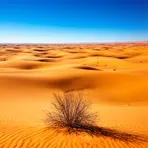
A large dry area with very little rain and few plants
 1
5.0
1
5.0
A very dry area of land with little or no plant life


 1
3.9
1
3.9
An area of land with little water and few plants
Compounds


How Dry

Surface Forms
Morphology
Etymology
Dryland comes from dry ('without much water') plus land ('ground' or 'area'), so dryland as a noun names land that gets very little rain and is not irrigated.