

wetland
 68
3.5
68
3.5

- noun
- /ˈwɛtˌlænd/
- The desire to protect our nation's wetlands is a relatively recent phenomenon.
- net loss of wetlands
- loss of wetlands
- protect wetlands
Loading YouTube…
Watch on YouTubeNow peatlands and this type of wetland is not specific to Canada.
- Now peatlands and this type of wetland is not specific to Canada.
- When we restore coastal wetlands, which protect us from storm surge and also filter water, they store carbon.
- And they know now why, because those structures all along the the the southern coast of Spain destroyed all the wetlands.
- Because the land became swampy in the spring as the snow melted, they argued that Rapanos's development plan would destroy protected wetlands.
- And so I wanted to do ponds and little wetland marshes above the bank.
- Its organs are things like soil, water, forests, wetlands, a species, fish, whales.
- And I told them no, because it's entirely covered in state let wetlands.
Examples
-
So far, they have found the wetlands are doing an excellent job, especially during major rainstorms.
Academic text (1999) -
I got the photo of the wetlands right here!
-
That may not be a wetland anymore.
-
Fifty yards of nature preserve that is a wetland, as I'm sure you know.
-
My work in these communities began more than ten years ago with studies on wetlands and associated agrofood systems.
Academic text (2011) -
When we restore coastal wetlands, which protect us from storm surge and also filter water, they store carbon.
-
Majuli is an important wetland with rare migratory birds, and it's a hub of Assamese religious culture.
-
Ice ages left a legacy of wetlands amid the forest-clad Poconos.
Academic text (2011) -
We've got lush wetlands that are that host migratory birds that come from afar.
-
The park features several beautiful wetlands that support a variety of wildlife.
Synonyms
 226
1.9
226
1.9
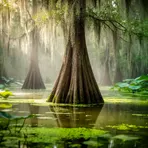
A low wet area with trees and plants that is often flooded
 64
2.6
64
2.6
A low, wet area with grasses and reeds near water
 33
4.9
33
4.9
A wet, soft area of ground with dead plants
 8
3.9
8
3.9
Low wet land with grass near rivers or lakes
 6
3.8
6
3.8
Low land that often floods and has trees and bushes
 3
4.4
3
4.4
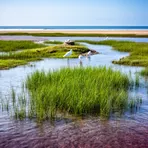
A low coastal area flooded by seawater where plants can live in salty water
 2
8.5
2
8.5
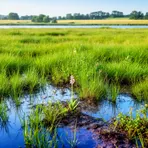
A low, wet area of land with grass that often lies between land and water
 1
5.8
1
5.8
An area of wet land with a thick layer of old plant material that holds water
 1
6.3
1
6.3
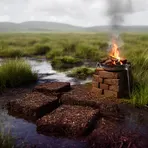
A wet, spongy area of land made of dead plants used as fuel

 1
9.9
1
9.9
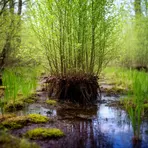
A wet area where the ground stays wet and small trees like willows grow
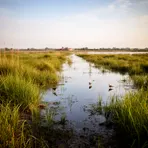
A low, wet area with tall grasses and standing water
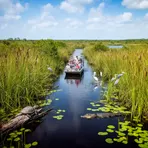
A large low wet area with thick plants and water
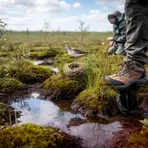
Wet, spongy land with moss and peat where plants and animals live
Antonyms

How Wet

Surface Forms
Morphology
Etymology
Wetland is made of two simple words: wet ('covered with water') and land ('ground'). So a wetland is ground that is always or sometimes wet, which is why it is a special home for water plants and animals.