
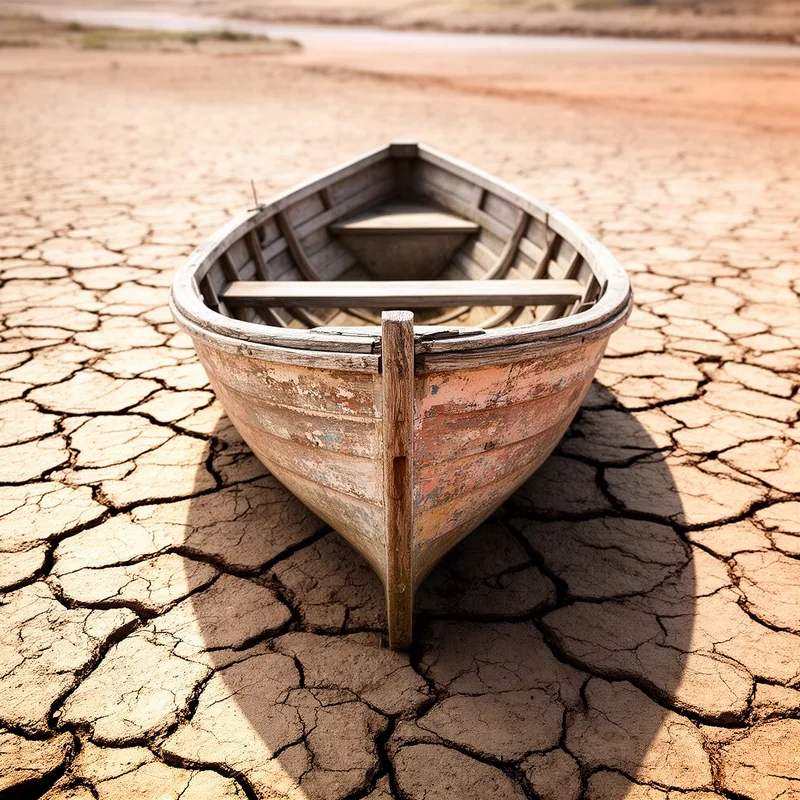
to dry up
 19
2.7
19
2.7

- phrasal verb
- /draɪ ʌp/
- When the stone was taken, the wells dried up and the river turned to sand.
- the market dries up
- work has dried up
Loading YouTube…
Watch on YouTubeIt dries out my it dries up my brushes.
- It dries out my it dries up my brushes.
- So you can work the dry parts and then once it dries up, we can do them.
- And also it dries up faster, you know, it goes in.
- They and they are sticky and they dry up and they do get stuck.
- But what I do like is it is it doesn't dry up so fast.
- It's so cute, so we're just going to let this kind of like dry up a bit.
Examples
-
As a result, when markets suddenly dry up, borrowers are left screaming for dollars.
Academic text (2012) -
Their water supply is dried up.
-
I think it would dry up within a couple of weeks.
-
Otherwise, all our sources would dry up.
-
And then the ponds completely dry up during the dry season.
-
The water holes dry up, and the rivers stop flowing.
-
My granddaddy owned the whole lake, then it dried up.
-
In 1982, however, the flood of foreign lending began to dry up, and economic hardship
Academic text (1992) -
Well, the funding's dried up, so somebody's gotta pay for all this.
-
The pond completely dried up during the hot summer months.
Synonyms
 570
1.0
570
1.0
To become free of water or wetness
 91
4.4
91
4.4
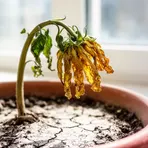
To become dry and weak, as with plants or feelings
 54
4.4
54
4.4
To become smaller, dry, and wrinkled because it loses water
 12
9.0
12
9.0
To dry something so it does not go bad
 11
2.4
11
2.4
To become dry or make something no longer wet
 11
3.5
11
3.5
Become small, dry, and wrinkled because it loses water
 7
3.7
7
3.7
To stop having any water, like a river or well
 5
4.1
5
4.1
To lose too much water and become very dry

To remove all water from something so it stays dry
Antonyms

How Dry

Surface Forms
Morphology
The meaning 'to lose all water or moisture' is directly derived from 'dry' (to remove moisture) combined with the particle 'up' indicating completion or totality; this compositional pattern is common in English phrasal verbs and is predictable. Cross-linguistic parallels and the clear semantics of both constituents make the sense immediately accessible to a B1 learner who knows the words.
Etymology
Dry up comes from a simple image: something loses all water and becomes dry, like a river or paint left in a can. The dry part means 'without water' and up shows it is finished, so when ideas or money dry up they 'run out' or 'stop'.