

dried-up
 18
3.5
18
3.5

- adjective
- /draɪd ʌp/
- After the drought, the once vibrant river had completely dried-up, revealing cracked earth beneath.
Loading YouTube…
Watch on YouTubeMy local reuse store has a giant dresser full of dried up markers.
- My local reuse store has a giant dresser full of dried up markers.
- Things like whether they're flowing, dried up, or frozen.
- You tell Mama I'll scrape the rust off the bike and take that old trail the dried up river left.
Examples
-
If the government subsidies hadn't dried up, I'd still be rolling in cash.
Fiction book (2002) -
The Prairie grass had become dried up and there was no convenient water to be had.
-
But everything in the room had dried up and had long ago lost its color and smell.
Fiction book (2002) -
We were in a, a sort of a waddy, you know, a dried up stream bed.
-
Jezero's crater is the site of a dried up lake.
-
As capital flows dried up, the crisis soon morphed into a crushing recession in the real economy.
Academic text (2018) -
Drew and I shuffle sideways down a rock hill toward the dried-up garden.
Fiction book (1998) -
The flowers in the garden had all dried-up by the end of summer, leaving only wilted stems.
-
She found a dried-up sponge in the sink, which needed water to become usable again.
Synonyms
 13
4.7
13
4.7
Having very little water because of heat
 8
2.8
8
2.8
Completely dry because it has no water left
 7
1.3
7
1.3
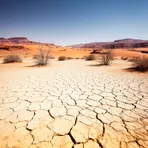
Land or plants that need water because they are dry
 3
3.4
3
3.4
A place with no water that is very dry like a desert
 1
3.6
1
3.6
Food with most water removed so it lasts longer
 1
9.9
1
9.9
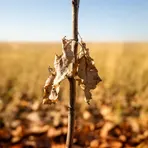
Very dry and withered, often describing plants or leaves
 1
3.4
1
3.4
Completely dry with no moisture
 1
4.6
1
4.6
It looks dry, thin, and lifeless like old leaves
 1
4.4
1
4.4
Left to dry in the air without using heat


 1
1.0
1
1.0
Something that is no longer wet because its water has gone away
 1
5.2
1
5.2
Dry and wrinkled because it has lost water

Completely dried so it has no water left

Dried and shrunken with a wrinkled surface from lack of water
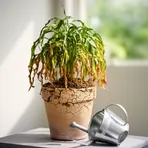
Not given water and so dry
Antonyms

How Dry

Surface Forms
Morphology
Etymology
The word dried-up comes from dry and up: dry means 'no water' and up adds the idea 'completely gone'. So dried-up describes something that has lost all its moisture and is not fresh anymore.