

downy bromegrass
- noun
- /ˈdaʊni ˈbroʊmˌɡræs/
- Specialized
- The softly hairy leaves are a distinctive feature of downy bromegrass.
Examples
-
Farmers often struggle with downy bromegrass in their crops.
-
Controlling downy bromegrass is important for maintaining healthy rangelands.
-
Downy bromegrass spreads rapidly in overgrazed pastures and can outcompete native plants.
-
The field was overrun by downy bromegrass this spring.
-
Downy bromegrass can quickly take over fields if left unchecked, leading to reduced crop yields.
-
Many farmers are actively looking for ways to control downy bromegrass to protect their crops from this invasive weed.
-
The presence of downy bromegrass in the pasture indicates overgrazing and a need for better land management.
Synonyms


 1
9.9
1
9.9
A fast-growing grass from Europe and Asia that often becomes a weed and replaces native plants
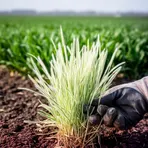
An annual grass with soft hairy leaves that often grows as a weed

A small Mediterranean grass with soft hairy leaves

A one-year grass with soft hairy leaves that often spreads and harms local plants

A wild grass with soft hairy leaves that grows each year in the Mediterranean region
Surface Forms
Morphology
The noun is compositionally built: 'downy' describes a soft, hairy texture and 'bromegrass' denotes a type of grass, so a B1 learner who knows both words can infer it is a grass with soft/hairy leaves. The botanical specifics (annual/winter, origin) are additional details but the core meaning is directly derivable from the constituents and follows a common adjective+noun descriptive pattern.
Etymology
Downy bromegrass comes from how the plant looks: downy means it has soft, fine hairs and bromegrass is a kind of grass. Because the leaves feel like soft down, the name helps you remember this grass, which is often called a 'weed' because it spreads fast.