
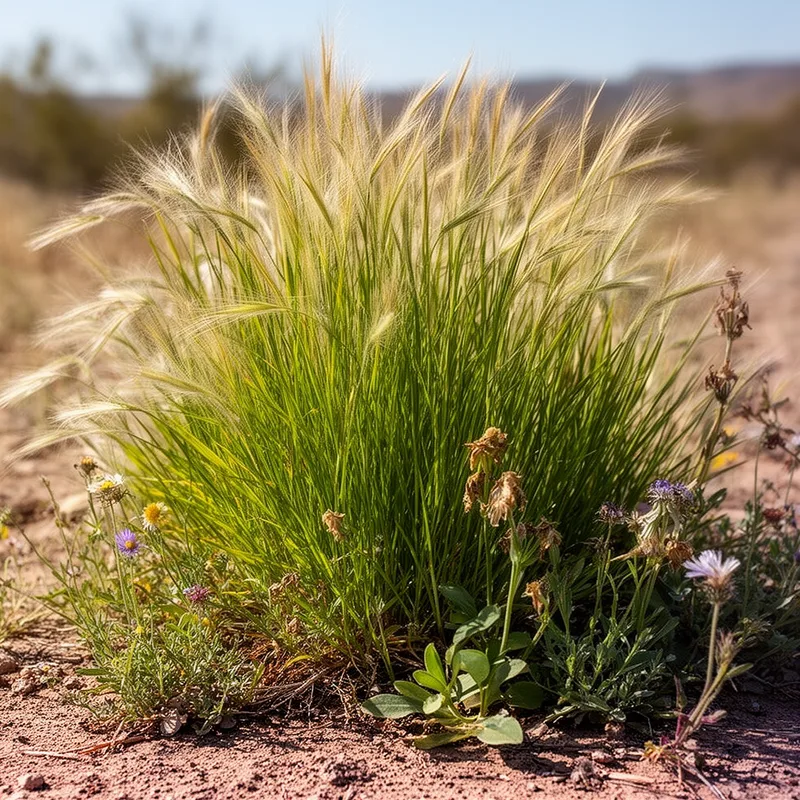
Bromus tectorum
- noun
- Specialized
- Bromus tectorum has spread rapidly across western North America, becoming a significant invasive species.
Examples
-
Bromus tectorum is often recognized for its fluffy leaves and its ability to invade pastures.
-
Researchers are studying the effects of Bromus tectorum on native plant communities.
-
Eradication of Bromus tectorum requires careful management to prevent reestablishment.
-
The Bromus tectorum plant is often found in disturbed areas.
-
Farmers are concerned about Bromus tectorum invading their fields.
-
In many regions, Bromus tectorum outcompetes native grasses and creates challenges for local ecosystems.
-
Conservationists are working hard to control the spread of Bromus tectorum in natural habitats.
Synonyms


 1
9.9
1
9.9
A fast-growing grass from Europe and Asia that often becomes a weed and replaces native plants

A small Mediterranean grass with soft hairy leaves

An annual grass with soft hairy leaves that often grows as a weed

A grass with soft hairy leaves that spreads quickly and is often a weed

A wild grass with soft hairy leaves that grows each year in the Mediterranean region
Surface Forms
Morphology
Bromus + tectorum
The form is a Latin binomial (genus + specific epithet), so a learner who knows 'Bromus' as a group of grasses can plausibly infer this refers to a species of Bromus (i.e. a kind of grass). However, the specific epithet 'tectorum' is not an English word and gives no transparent information about the species' life cycle or invasive behaviour, so the full, precise meaning is not predictable from the parts.
Etymology
Bromus tectorum may come from old Latin words: Bromus is the name for a kind of grass and tectorum means 'of roofs', because people may have found or used the dry grass to cover roofs. So the name gives a simple picture—a common grass you might see on roofs or in dry places—which helps you remember this species.