

double replacement reaction
- noun
- /ˈdʌbəl rɪˈpleɪsmənt rɪˈækʃən/
- Specialized
- Teachers use clear demonstrations to show how a double replacement reaction occurs between two salt solutions.
Examples
-
A double replacement reaction occurs when two compounds exchange ions.
-
A double replacement reaction often results in the formation of a precipitate or gas.
-
In a double replacement reaction, silver nitrate reacts with sodium chloride to form silver chloride and sodium nitrate.
-
Can you explain what a double replacement reaction is?
-
In a double replacement reaction, the sodium ions of sodium chloride react with the bicarbonate ions of sodium bicarbonate to form new compounds.
-
During a double replacement reaction, silver nitrate and potassium chloride react to produce silver chloride and potassium nitrate.
-
A classic example of a double replacement reaction occurs when magnesium sulfate mixed with barium chloride results in barium sulfate and magnesium chloride.
Synonyms

A chemical change where two compounds exchange parts to make two new compounds

A reaction between two chemical compounds where parts swap to form two new compounds
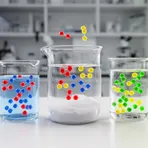
Two compounds swap parts to make two new compounds
Surface Forms
Morphology
double + replacement + reaction
The phrase is compositionally transparent: 'double' (twofold) + 'replacement' (the act of replacing) + 'reaction' (chemical process) yields the interpretable notion of a chemical process involving two replacements. A B1 learner who knows the constituent words can infer that it refers to a reaction where two parts are exchanged or replaced (though the specific ionic exchange detail is technical vocabulary beyond basic inference).
Etymology
Double replacement reaction is like a partner swap: imagine two couples, the double idea, whose partners switch places, the replacement idea, so each couple becomes a new pair. In chemistry this means the parts of two compounds 'swap' to form two new compounds, so the name describes what happens.

