
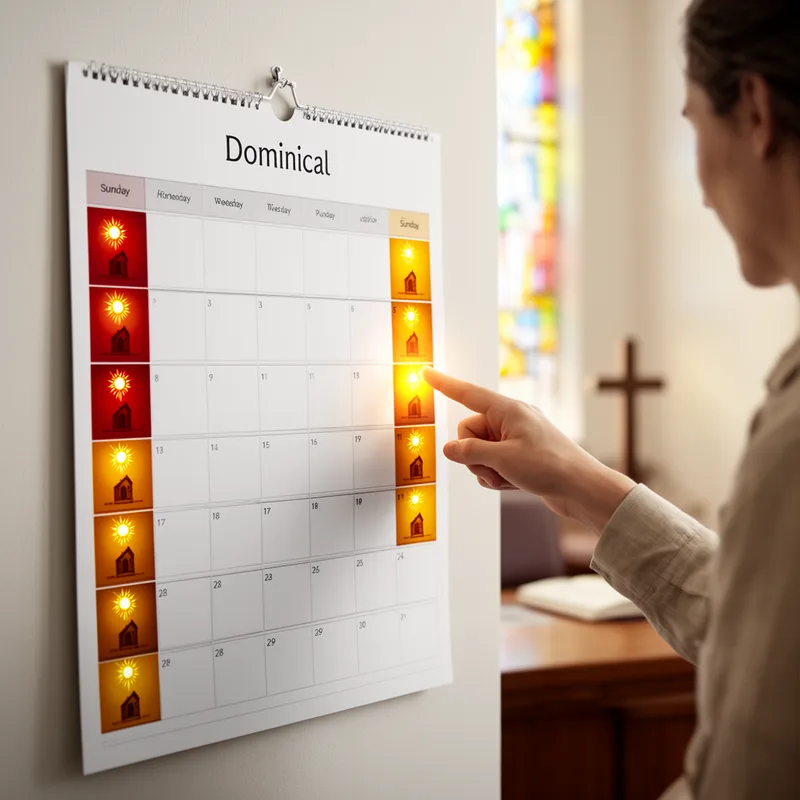
dominical calendar
- noun
- /ˈdɒmɪnɪkəl ˈkælɪndər/
- Formal
- The dominical calendar shows which dates fall on Sundays for the entire year.
Examples
-
The dominical calendar helps churches plan their liturgical schedules.
-
Have you seen the new dominical calendar for this year?
-
He referenced the dominical calendar to determine the dates for each Sabbath.
-
Historians used a dominical calendar to track religious observances in old manuscripts.
-
The dominical calendar helps people keep track of Sundays.
-
With the dominical calendar, the congregation can easily identify the Sundays for worship services.
-
Using the dominical calendar, families planned their weekend activities around church attendance.
Synonyms


 1
3.6
1
3.6
A calendar showing Christian holy days, festivals, and fasting times throughout the year

A plan of the Christian year showing dates of fasts and holy days like Easter
Surface Forms
Morphology
The adjective 'dominical' means 'related to Sunday', so combined with 'calendar' the phrase straightforwardly denotes a calendar that marks or indicates Sundays. This is a regular adjective + noun composition and would be directly derivable by a learner who knows both constituent meanings.
Etymology
Dominical calendar The noun dominical calendar comes from a church word dominical, meaning 'of the Lord' and used for 'Sunday', and the word calendar, meaning 'a list of dates'. Churches long ago used these calendars to mark which days were Sundays, so today dominical calendar means a calendar that shows the dates of Sundays.