
dizygotic


 1
9.1
1
9.1
- adjective
- /ˌdaɪzɪˈɡɒtɪk/
- Specialized
- You can calculate this by comparing monozygotic identical twins with fraternal dizygotic twins.
- dizygotic twins
- monozygotic or dizygotic
Loading YouTube…
Watch on YouTubeYou can calculate this by comparing monozygotic identical twins with fraternal dizygotic twins.
- You can calculate this by comparing monozygotic identical twins with fraternal dizygotic twins.
- Then do dizygotic twins, which share the intrauterine environment but only share half of their genes on average like fraternal siblings do.
Examples
-
Doctors can determine if babies are dizygotic by checking if they have separate placentas during an ultrasound.
-
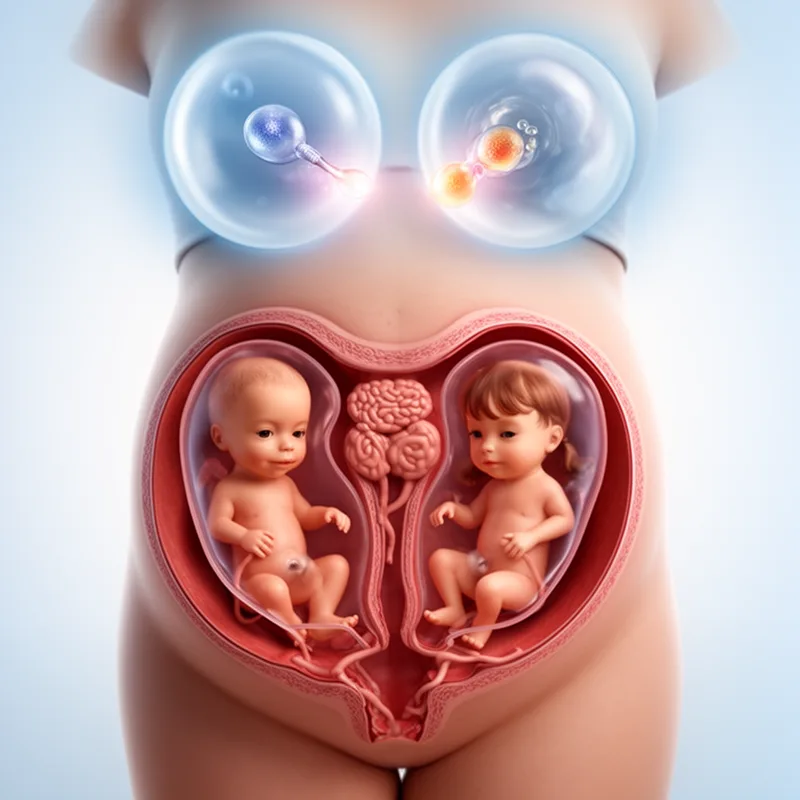
Unlike identical twins, dizygotic twins come from two separate eggs fertilized by different sperm.
-
Looking at dizygotic twins, non identical twins.
-
Suppose the twins are monozygotic or simply dizygotic same-sex.
Academic text (2008) -
These Ministry of Health and Social Affairs data did not differentiate between dizygotic and monozygotic twins.
Academic text (2008) -
My sister and I are dizygotic twins, so we look quite different from each other.
Synonyms
 7
5.9
7
5.9
Twins who come from two different eggs and are not identical
 1
7.7
1
7.7
Twins born from different eggs who are not identical

Twins who come from two separate eggs each fertilized by a different sperm
Of twins who come from two different eggs and are not identical
Compounds

- Specialized
1
7.5
A twin who comes from a different egg and is not identical to the other twin
Surface Forms
Morphology
Etymology
Dizygotic combines di- 'two' and zygote, from a root meaning 'yoke' or 'join'. A zygote is the 'joined' egg and sperm, so dizygotic twins come from two different fertilized eggs and are not identical.