
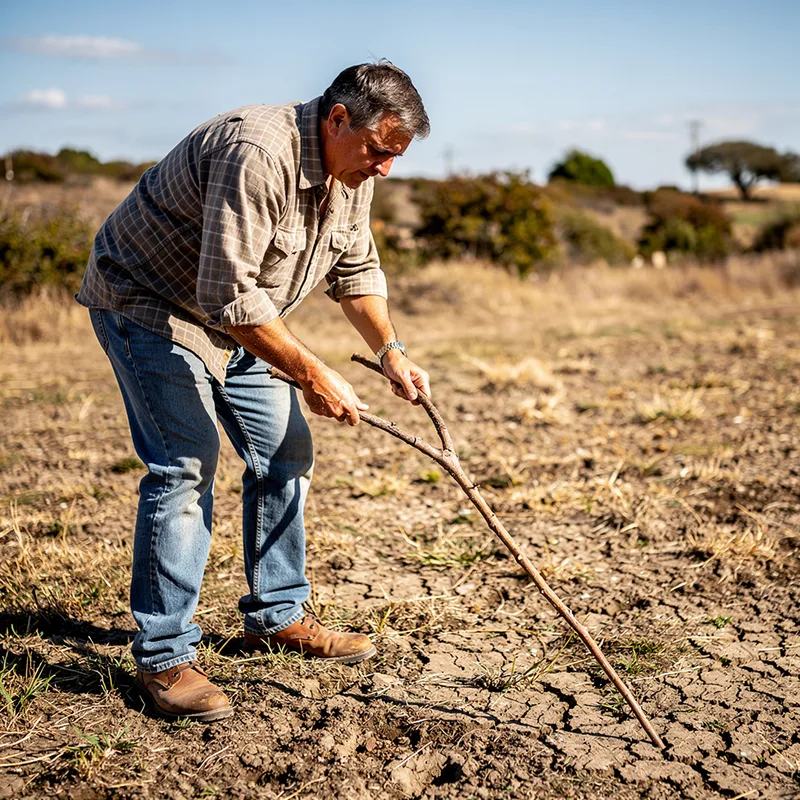
to divine
 16
9.0
16
9.0

- verb
- /dɪˈvaɪn/
 :
adivinar
:
adivinar
- The fortune teller claimed she could divine the future using her intuition and crystal ball.
- difficult to divine
- divine the intent
- divine the problem
While we live in our mortal flesh, we're unable to divine by our senses.
- While we live in our mortal flesh, we're unable to divine by our senses.
- Anytime you try to divine your opponent's strategy, she can do the same thing back to you.
- That is your, you know, I wish we had these divining rod to find water.
- And for some reason I have a memory of a dude with a divining rod coming to see if there was water underneath this land.
- But though they had but divining eyes, I was wrong about the probabilities.
- Well, every time there is a school shooting or a mass shooting is just divined by the FBI.
- What are the, each of the, the, the bullet points in each one of the things What we're doing is defining the, we're divining the process.
Examples
-
Now, then, perhaps I can divine a solution to this thorny problem.
-
Anytime you try to divine your opponent's strategy, she can do the same thing back to you.
-
I think that the, the hard part for a lot of people is, is trying to divine what that truth is though.
-
No need to divine with me, sir.
-
You cannot divine the motive there?
-
Liakot's family hired the woman first to divine the reason for his madness.
Academic text (2001) -
One hears the profound voice of the earth and divines the powerful life of the trees.
Academic text (1998) -
I cannot, even now, divine the answer, but something of a wordless compulsion came over me.
Fiction book (2001) -
If he was here, of course, he'd tell you what to do, but an editor has got to try and divine what was in his mind.
-
Anyone who can add, subtract, multiply, and divide can divine its truths.
Antonyms


Compounds




- Literature
2
8.4
A long poem by Dante Alighieri about a soul's journey through Hell, Purgatory, and Paradise



- Formal
1
9.9
A set of prayers that priests and some laypeople say at set times each day
 1
9.9
1
9.9
A political idea that kings get their power from God and are not controlled by their people




 1
8.5
1
8.5
A name for the Christian leader John believed to have written the fourth Gospel, three letters, and Revelation

- Literature
A book in the Bible that describes visions about the end of the world
How Certain

Surface Forms
Etymology
The verb divine comes from the Latin root divinare, which meant 'to see or foretell' by a special insight. So to divine something is to find or guess it by intuition or a kind of 'second sight', as in divination.