
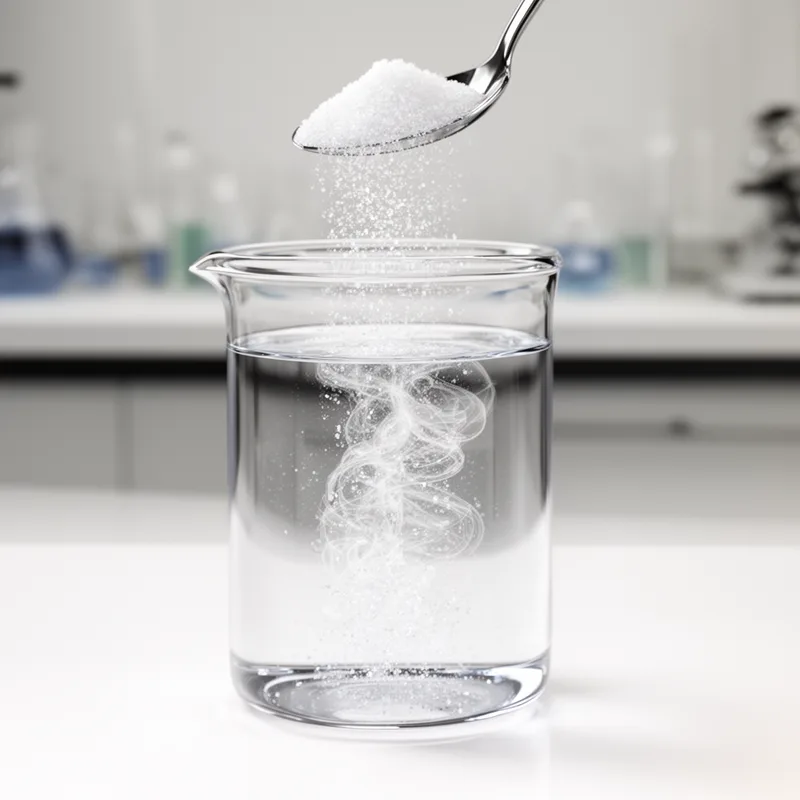
dissolving agent
- noun
- /dɪˈzɑlvɪŋ ˈeɪdʒənt/
- Specialized
- Water acts as an excellent dissolving agent for many ionic compounds.
Examples
-
Acetone acts as a powerful dissolving agent in nail polish remover.
-
Salt readily disperses in a dissolving agent such as water.
-
In chemistry, a dissolving agent like ethanol can help mix two substances.
-
Water is a common dissolving agent.
-
Salt readily disperses in a dissolving agent such as water.
-
Water acts as an excellent dissolving agent for many ionic compounds.
-
Acetone acts as a powerful dissolving agent in nail polish remover.
Synonyms

 33
4.9
33
4.9

A liquid that dissolves other substances to make a solution


 1
7.1
1
7.1
A liquid that makes another thing break into tiny parts and mix with it, like water or alcohol

A liquid that dissolves other substances in chemistry

A liquid that dissolves things, often used in labs
A substance that dissolves another substance so their molecules mix
Surface Forms
Morphology
The meaning is directly compositional: 'dissolving' (causing dissolution) combined with 'agent' (a thing that does something) yields a substance that dissolves others. This follows regular English morphological and noun-compound patterns and is cross-linguistically transparent, so a B1 learner who knows both constituents can infer the meaning.
Etymology
Dissolving agent gives a simple picture: dissolving means making something seem to disappear into a liquid, and agent means a helper, like sugar vanishing into tea when you stir it. That's why dissolving agent means a liquid that helps a substance 'dissolve' into another.