
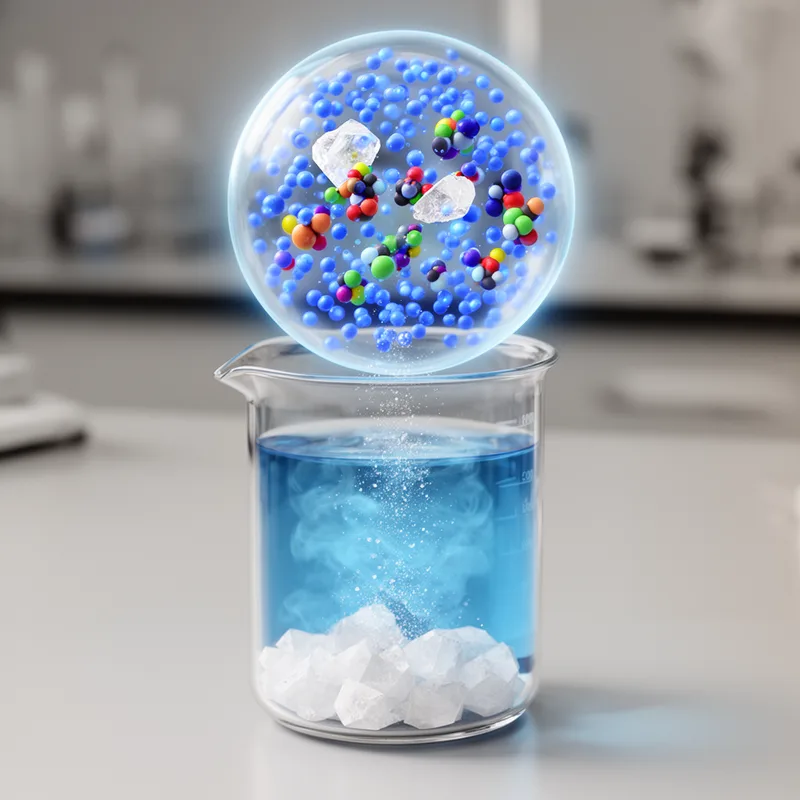
solvating agent
- noun
- /ˈsɒlveɪtɪŋ ˈeɪdʒənt/
- Specialized
- Water can act as a solvating agent for many ionic compounds.
Examples
-
Water is a common solvating agent in many chemical reactions.
-
The choice of solvating agent significantly affects the crystallization process.
-
Selecting an appropriate solvating agent is crucial in pharmaceutical formulation.
-
In organic chemistry, a solvating agent can enhance reaction rates.
-
Chemists often use ethanol as a solvating agent to dissolve various organic compounds.
-
Acetonitrile is an effective solvating agent for many polar substances in laboratory settings.
-
When preparing a solution, selecting the right solvating agent can improve the solubility of solutes.
Synonyms


 1
7.1
1
7.1
A liquid that makes another thing break into tiny parts and mix with it, like water or alcohol

A liquid that dissolves things, often used in labs
Liquid that makes other materials become part of it, like water

A liquid that dissolves other substances in chemistry
How Effective
- Specialized

- Specialized
33
4.9
Surface Forms
Morphology
The compound is fully compositional: 'solvate' (to cause or undergo solvation) combined with 'agent' (an entity that produces an effect) yields a substance that causes or facilitates solvation. Although the term is technical, its meaning follows regular English noun-formation patterns and would be predictable to a learner who knows both constituents.
Etymology
Solvating agent paints a simple picture: solvating is like 'surrounding' and agent is a helper that pulls tiny pieces of a substance apart so they mix into a liquid. So, a solvating agent is a substance that helps another substance 'dissolve' in a liquid.