

to disarray


 1
5.6
1
5.6
- verb
- /ˌdɪsəˈreɪ/
- "Judy yields to an impulse: leaning against the bed, she tries to embrace the old man, disarraying and tugging at the tubes and wires attached to his upper body.
- her hair was disarrayed
Examples
-
I watched him hurry toward the gate as Dr. Margaret Foley suddenly emerged after him, harried, her graying hair disarrayed.
Fiction book (1998) -
We took the train together, drinking Scotch the whole way, and met our stiff and beautiful debutante dates quite drunk, our hair messed up and our red sashes disarrayed.
Fiction book (1996) -
You cause disarray of the stereocilia.
-
Never to wander blind in first foray. Sentient air, lead her not to disarray. She flails.
Academic text (2015) -
Conservatives are comparably disarrayed.
Blog text (24) -
Students of cropland change can be thoroughly confused by the disarrayed U.S. Department of Agriculture, which publishes two different sets of "official federal statistics" that do not agree (Table I).
Academic text (2001) -
She had obviously come to our house in haste; her sleek black hair was disarrayed, and she still wore the slim jeans and sweatshirt she had obviously changed into when she got home.
Fiction book (1998) -
The table was littered with cigarette butts and disarrayed piles of poker chips; behind it, the bed was strewn with delicatessen sandwiches.
Fiction book (1997) -
The woman in "Sweeney Among the Nightingales" is neither defeated, nor disarrayed, nor distraught upon the floor, but rather "reorganized" there by a force that redresses Sweeney's shattering effect.
Academic text (2017) -
The storm disarrayed the entire garden, leaving plants uprooted and debris scattered everywhere.
Synonyms
 248
1.0
248
1.0
To make something untidy or dirty
 65
2.7
65
2.7
To make people confused and things messy
 52
3.0
52
3.0
To make something untidy, dirty, or not in the right place
 38
1.9
38
1.9
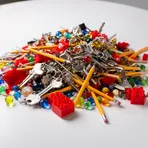
Mix things up so their order is not clear
 22
3.8
22
3.8
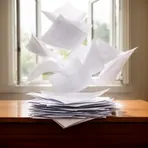
Mix things together in a confused way
 7
5.5
7
5.5
To make something untidy or not in its usual order
 7
4.1
7
4.1
To make a place or situation very messy and confused
 4
4.5
4
4.5
To make something lose its order or structure
 2
8.1
2
8.1
To make someone's hair or clothes look untidy
 1
2.1
1
2.1
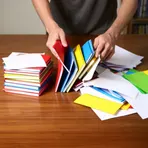
Make a place messy so things are not in order
 1
6.4
1
6.4
To make something messy or not in the right order
Antonyms


How Messy

Surface Forms
Morphology
Etymology
Disarray As a verb, dis- means 'not' and array means 'order', so to disarray something is to make it 'not in order' or simply to 'mess up'.