
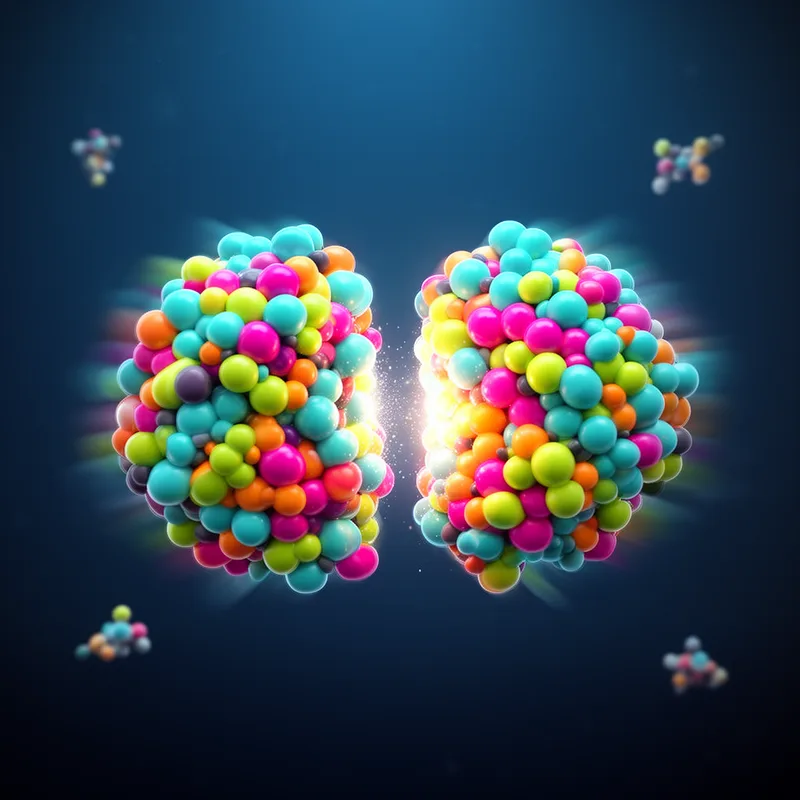
dimerization
- noun
- /ˌdaɪməraɪˈzeɪʃən/
- Specialized
- During the experiment, we noticed that the rate of dimerization increased significantly at higher temperatures.
Examples
-
Since surface dimer bonds are weaker than bulk Si-Si bonds, this dimerization actually facilitates further etching.
Academic text (1998) -
The impact of MPO dimerization on structural and functional properties is not fully understood, although monomeric MPO is found in vitro and in vivo.
Academic text (2018) -
Because of the underlying diamond-lattice crystal structure of silicon and the consequent orientation of the chemical bonds, the dimerization direction changes by 90 degrees from layer to layer.
Academic text (1993) -
Changing the nitrogen atom in the pyrrole portion to oxygen or sulfur had no effect, but replacing hydrogen with bromine or increasing compound polarity enhanced the distastefulness of the compound, as did dimerization.
Academic text (2011) -
In the biochemical process, dimerization occurs when two protein molecules join together to form a larger functional unit.
-
The scientist explained that dimerization is essential for the activation of certain enzymes in metabolic pathways.
How Many
- Specialized
 1
8.6
1
8.6


- Specialized
- Specialized
- Specialized
Surface Forms
Morphology
Etymology
Dimerization comes from parts that mean 'two' (di-) and 'part' (-mer), just like in monomer ('one part') and polymer ('many parts'). So, dimerization is the process where two molecules join to make a pair, which is why it means 'forming a dimer'.