
dimer
 3
8.3
3
8.3

- noun
- /ˈdaɪmər/
- Specialized
- Arsenic atoms were indeed in the dimer configurations, but the dimers were isolated.
- dimer row
- D-dimer
- dimer chains
Examples
-
So the lithium dimer bonding order is one, right?
-
Three theoretical dimer configurations are also shown in Figure 2.
Academic text (2015) -
Diffusion is much easier along the directions of the rows of dimers formed by the reconstruction than across them.
Academic text (1993) -
Since surface dimer bonds are weaker than bulk Si-Si bonds, this dimerization actually facilitates further etching.
Academic text (1998) -
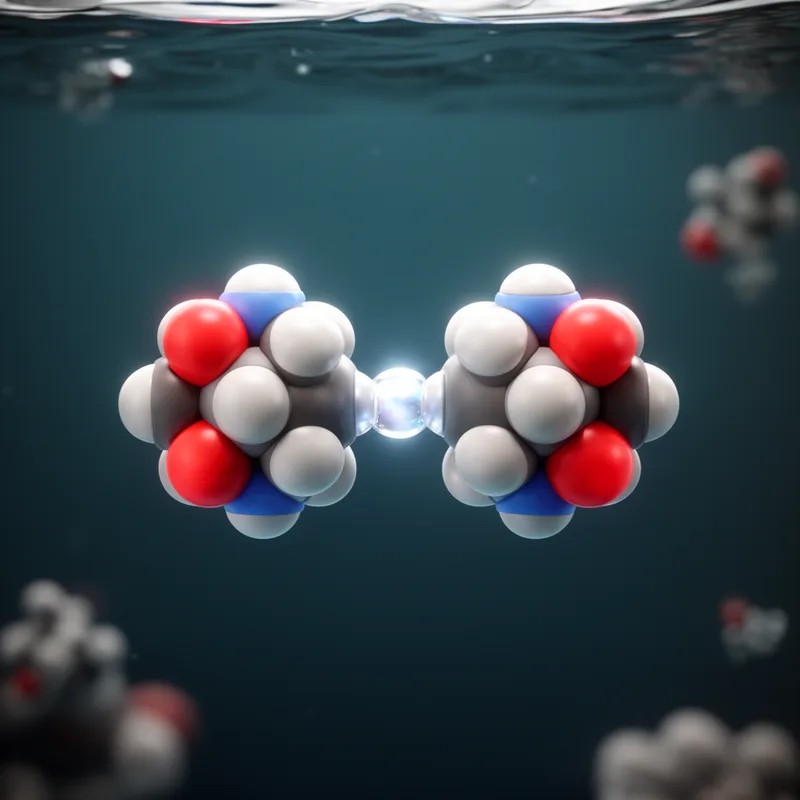
The lithium dimer is formed when two lithium atoms bond together.
-
In chemistry class, we learned that a dimer consists of two identical monomer units.
-
Researchers studied how the dimer structure influences the properties of the compound.
How Many Parts


Surface Forms
Morphology
dimer = mer (transparent) = di + mer
A standard chemical formation: the prefix 'di-' (two) attaches to the combining form '-mer' to give the sense 'two-unit molecule', which is directly interpretable for learners familiar with chemical word-formation patterns.
Etymology
Dimer comes from the Greek parts di- meaning 'two' and -mer meaning 'part', the same root you see in polymer and monomer. So, a dimer is 'two parts' joined together, which is why it means two identical units bonded in chemistry.