
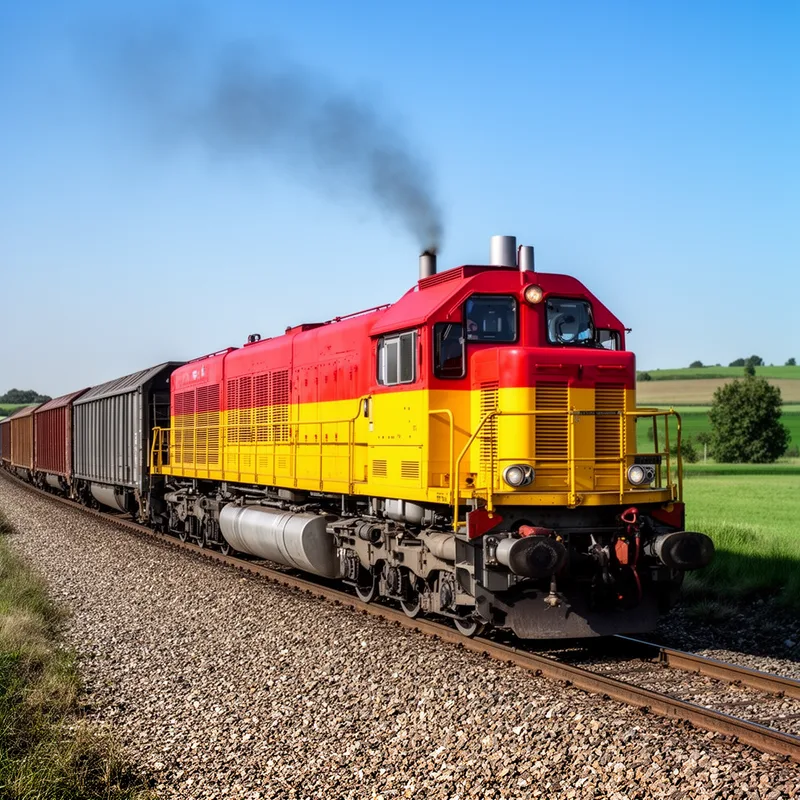
diesel locomotive
 1
4.1
1
4.1

- noun
- /ˈdiːzəl ˌloʊkəˈmoʊtɪv/
- Specialized
- The OilPro will be capable of checking for several key operating conditions on big diesel locomotives, noted Wilson.
- build diesel locomotives
Examples
-
As the train approached, the sound of the diesel locomotive's engine filled the air.
-
Testing the oil of diesel locomotives gives operators valuable information about engine operating conditions.
Academic text (2000) -
A diesel locomotive pulled two flat cars for displays and to serve as a speaker's platform.
Academic text (2007) -
De-industrialization in Ukraine led to the fact that we now purchase these diesel locomotives from the United States of America.
-
The same team also converted a second SD40-2 diesel locomotive and began monitoring it in August 1992.
Academic text (1995) -
The oil that circulates through a diesel locomotive is housed in a 300-gallon tank and is pumped through the engine at rates that may exceed 300 gallons per minute, explained Wilson.
Academic text (2000) -
ADtranz designs and manufactures people movers, light rail vehicles, and metro trains; regional and high-speed trains; electric and diesel locomotives; signaling; fixed installations; and total rail systems.
Academic text (1999) -
The diesel locomotive chugged along the tracks, pulling a long line of freight cars behind it.
-
Travelers eagerly awaited their journey as the diesel locomotive arrived at the platform.
Synonyms
 89
3.5
89
3.5
A vehicle that pulls train cars on railway tracks
 37
4.6
37
4.6
A train engine that pulls rail cars

 1
5.5
1
5.5
A train engine that uses electric motors powered by a diesel engine
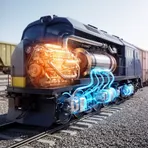
A train engine that uses a diesel engine to make electricity that runs its electric motors
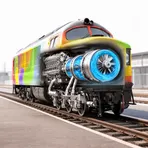
A train engine that uses a diesel engine and a hydraulic system to send power to the wheels
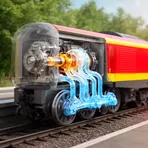
A train engine that uses a diesel motor and fluid pressure to drive the wheels
A large machine on wheels that pulls a train on tracks

A machine on train tracks that pulls or pushes trains
Surface Forms
Morphology
The compound combines the known noun 'diesel' (a type of engine/fuel) with 'locomotive' (a railway engine), so its meaning as a train engine powered by a diesel engine is directly derivable from the parts. This is a regular noun+noun compositional pattern found across languages and follows standard English compound formation, making it immediately comprehensible to a B1 learner who knows both constituents.
Etymology
The compound noun diesel locomotive is named after Rudolf Diesel, who invented the diesel engine. It literally pictures a locomotive, a train engine, powered by a diesel engine instead of steam or electricity, so the name means 'a train engine that runs on diesel'.