
dicotyledon


 1
9.9
1
9.9
- noun
- /ˌdaɪkəˈtɪlɪdən/
- Specialized
- The dicotyledon is known for its broad leaves.
Examples
-
The oak tree is a classic example of a dicotyledon with its broad leaves and two seed leaves.
-
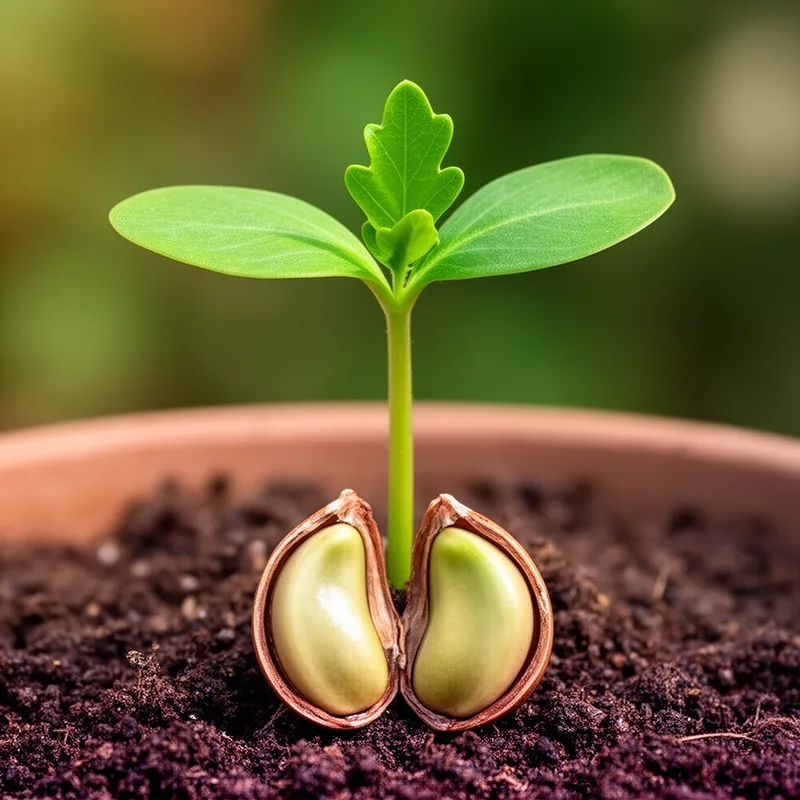
The seed of a dicotyledon splits easily into two halves when opened.
-
Many garden flowers, such as roses and sunflowers, are dicotyledons.
-
Many dicotyledons are used for medicinal purposes.
-
Rose bushes are an example of dicotyledons because their seeds contain two cotyledons.
-
Many trees, such as oaks and maples, are classified as dicotyledons due to their two embryonic leaves.
-
In gardens, you will often find dicotyledons growing alongside monocotyledons like grasses.
Synonyms
 1
9.1
1
9.1
A plant that makes flowers and whose seeds have two small leaves inside

A flowering plant with two seed leaves that grows by adding new layers on the outside

A woody flowering plant whose trunk adds new wood outside and whose seed has two leaves
Surface Forms
Morphology
Etymology
Dicotyledon comes from Greek parts di- 'two' and cotyledon 'seed leaf'. So a dicotyledon is a flowering plant whose seed makes two little leaves, which is why its seed often splits into two halves.