
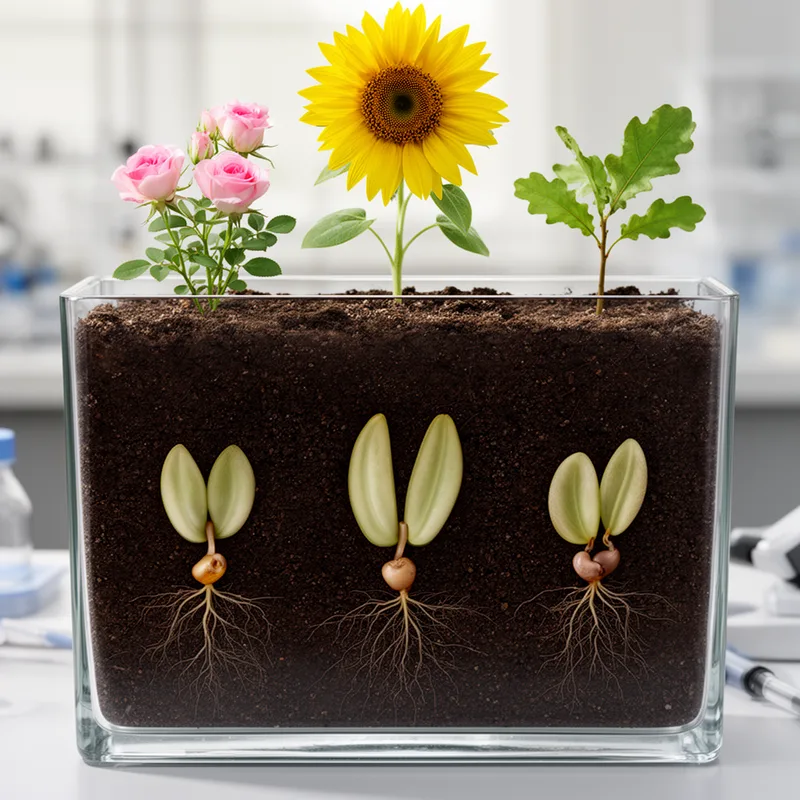
dicot genus
- noun
- /ˈdaɪkɒt ˈdʒɛnəs/
- Specialized
- The plant in my garden belongs to a dicot genus, which means it has two seed leaves.
Examples
-
Sunflowers are part of the dicot genus, known for their distinct broad leaves and flowering features.
-
When studying botany, students learn that a dicot genus can help classify various flowering plants based on their seed structure.
-
However, the dicot genus Ceratophyllum provides a possible example of punctuated hydrophily.
Academic text (1996)
Surface Forms
Morphology
The noun phrase is directly compositional: 'dicot' specifies the type of 'genus', so a learner who knows 'dicot' (a plant with two seed leaves) and 'genus' (a biological grouping) can infer it refers to a genus made up of dicotyledonous plants. This is a straightforward noun-modifier construction that is cross-linguistically common, so the meaning is transparent to learners who know the parts.
Etymology
Dicot genus comes from a simple plant picture: the part di- means two and cotyledon refers to a 'seed leaf', so these plants make two small leaves when the seed begins to grow. That's why the term means a group ('genus') of plants that have those two first leaves.

