
diagenetic
- adjective
- /ˌdaɪəˈdʒɛnɪtɪk/
- Specialized
Examples
-
Additionally, there are likely to be numerous locally developed shale or diagenetic vertical barriers to flow.
Blog text (30) -
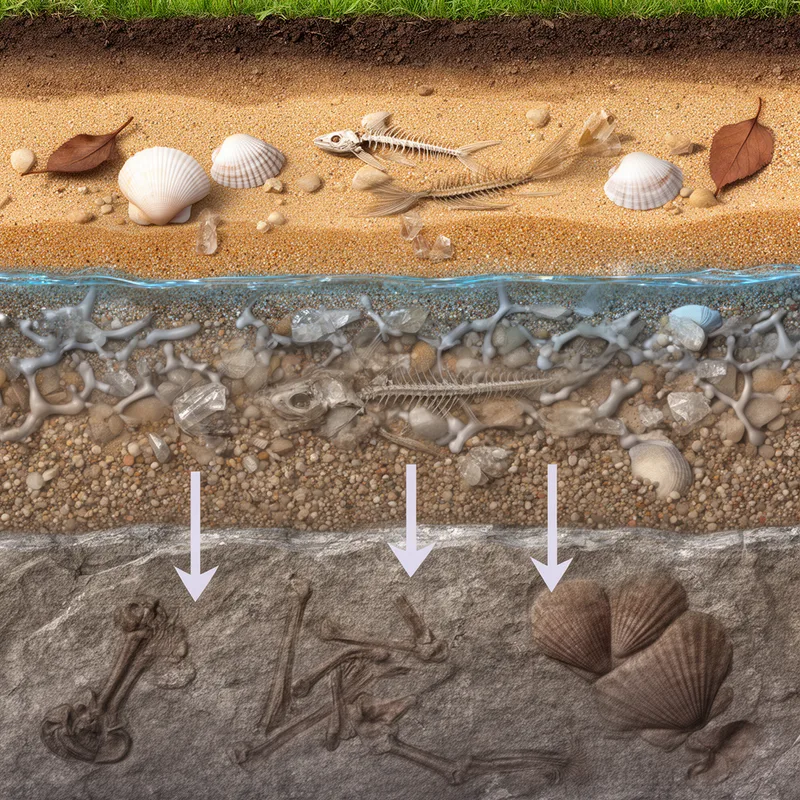
The study examined the diagenetic changes in sediments after they were buried under layers of rock.
-
Fossils can reveal much about the diagenetic processes that transformed organic remains over millions of years.
-
Researchers found that diagenetic alterations significantly affected the rock's permeability and porosity.
How Altered


Surface Forms
Morphology
diagenetic = diagenesis (semi-transparent) = dia + genesis + diagenesis + etic
The adjective is a regular derivation from the noun 'diagenesis' with the adjectival suffix '-etic', so the immediate derivation is straightforward.
Etymology
Diagenetic comes from the parts dia- meaning 'through' and genesis meaning 'origin' or 'to create', the same idea behind the common word generate. So, diagenetic describes the changes that happen 'through' time to buried sand, mud, or bones as they are slowly turned into rock or fossils.