
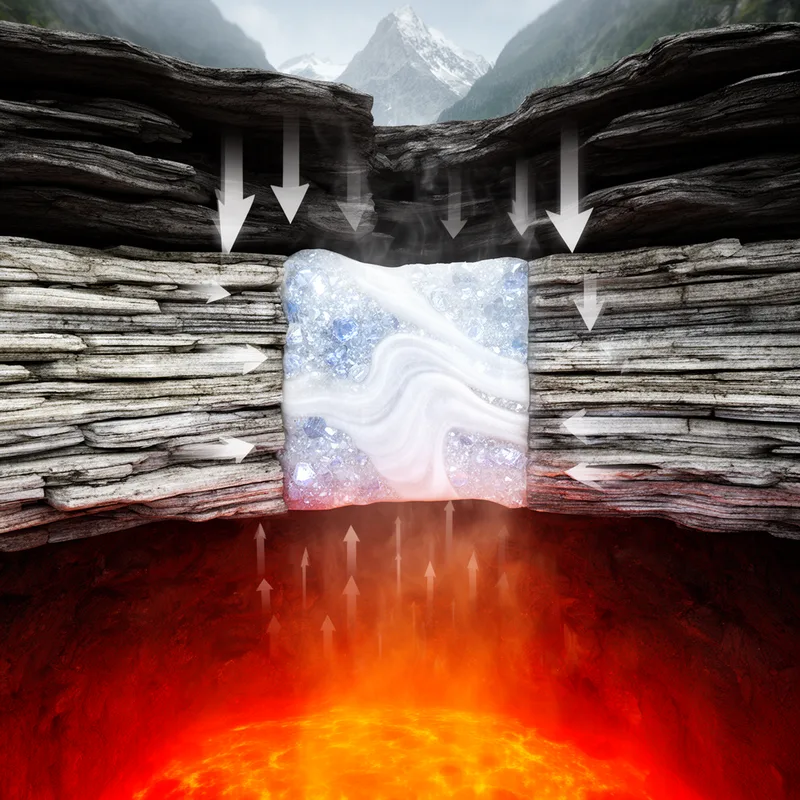
metamorphic
 2
7.7
2
7.7

- adjective
- /ˌmɛtəˈmɔrfɪk/
- Specialized
- Classification methods might be the focus, which can help students understand, for example, the difference between igneous and metamorphic rocks.
- metamorphic rock
- metamorphic process
Loading YouTube…
Watch on YouTubeThat would be your metamorphic quartz materials.
- That would be your metamorphic quartz materials.
Examples
-
Not as much as I am in the metamorphic or sedimentary rock categories.
-
That would be your metamorphic quartz materials.
-
- It's a metamorphic rock.
-
Metamorphic rock is a very special sort of rock.
-
Like many stones from the area, it was metamorphic; it had once been another rock, but at a high temperature and pressure, it had crystallized.
Fiction book (1995) -
Marble is a metamorphic rock formed by the recrystallization of sedimentary carbonate rocks, such as limestone.
Academic text (2007) -
Yes, as Gloria has quite rightfully pointed out, you'll be asked to illustrate the differences between igneous and metamorphic rock, and to provide specific examples of each.
-
Granite, when subjected to extreme heat and pressure, can transform into a new metamorphic rock.
-
The geologist explained how metamorphic rocks are formed from existing rocks due to environmental changes.
-
An example of a metamorphic rock is schist, which has distinct layers formed by intense pressure.
Synonyms

A rock changed by heat and pressure deep inside the Earth
Compounds
How Altered

Surface Forms
Morphology
metamorphic = metamorph (semi-transparent) = meta + morph + ic
The adjectival suffix '-ic' on 'metamorph' is structurally clear, but the geological and scientific sense is specialized enough that the meaning is only partly predictable.
Etymology
Metamorphic comes from the parts meta- meaning 'change' and morph meaning 'shape'. So a metamorphic rock is one whose form has been changed by heat and pressure deep in the Earth.