
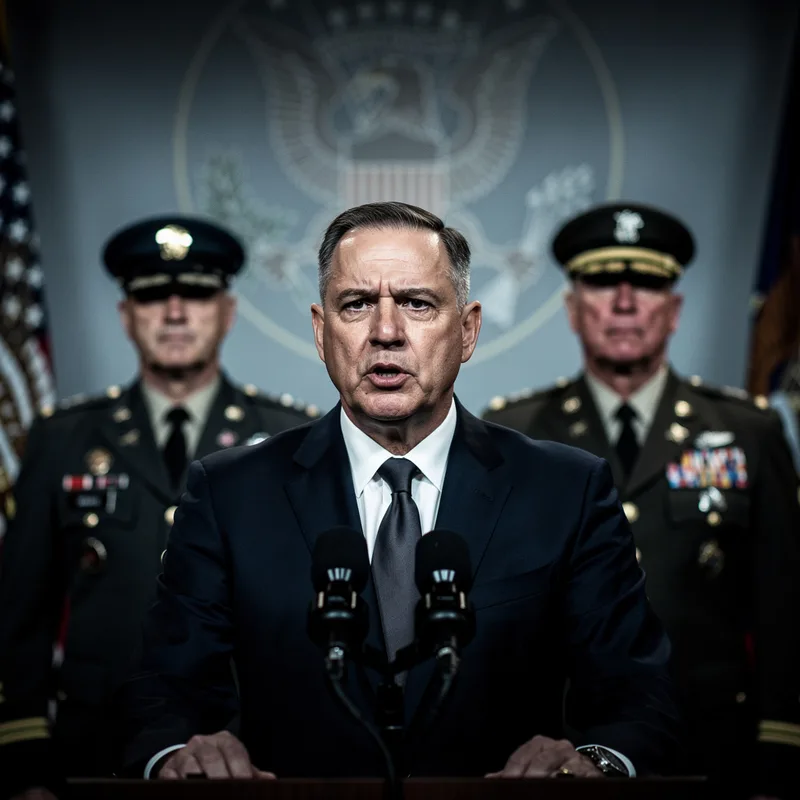
to declare war
 54
4.4
54
4.4

- phrasal verb
- /dɪˈklɛr wɔr/
- Formal
- Ten days later, King Frederick William of Prussia declared war on France.
- declare war on Germany
- power to declare war
- declare war on England
Loading YouTube…
Watch on YouTubeOlder men declare war, but it is the youth that must fight and die.
- Older men declare war, but it is the youth that must fight and die.
- And if we go to war, the Constitution says Congress must vote to declare war.
- Yeah, but yeah, our military decided to take a war to the rest of the world, declare war on the rest of the world.
- So I made him vote on an amendment that's said and on the bill and said that they had to declare war.
Examples
-
Nonetheless, early in its term, the Bush administration declared war on all outstanding international treaties.
Academic text (2003) -
Only Congress can declare war.
-
Now the British declared war on us.
-
In response to this, the U.S. has declared war on Canada.
-
Why would we then declare war based on this?
-
We are ready to declare war on both England and France.
-
We and Great Britain declared war on Japan.
-
In 1917, as you know, President Wilson declared war on Germany.
Fiction book (1996) -
The attack on Pearl Harbor, President Roosevelt declared war on the Japanese, a date which will live in infamy.
-
The government decided to declare war after the enemy's aggressive actions.
Synonyms
 274
3.4
274
3.4
To start fighting in a war between countries or groups
 229
5.3
229
5.3
To officially announce something to the public
Antonyms


How Hostile
380
4.4

- Formal
54
4.4
274
3.4
22
6.4
- Informal
1
7.9
- Offensive
6
4.2
Surface Forms
Morphology
The meaning is directly and compositionally derived from 'declare' (to formally announce) + 'war' (armed conflict); a learner who knows both words can infer that it means to make a formal announcement of entering a state of war. This construction is cross-linguistically common and follows standard nomination patterns, so it should be immediately understandable to a B1 learner.
Etymology
The phrase declare war comes from the image of a leader making a public, official announcement that their country will fight another. The verb declare means to announce openly and war means open fighting between countries, so the phrase now means 'to officially announce that a country will fight another'.