

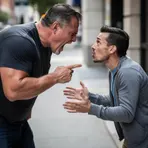
to make a threat
 6
4.2
6
4.2

- phrasal verb
- /meɪk ə θrɛt/
- Offensive
- The only time I would consider calling the authorities is when someone has made a threat of immediate violence and then doesn't respond to immediate help.
- a student made a threat
Examples
-
If just 10% of students made a threat at school every month, one could very conservatively expect more than 14,600 threats over the course of the school year.
Academic text (2004) -
It's a huge mistake to make a threat like that.
-
You heard him make a threat, and that could still mean that he is capable of violence, no matter what I saw at his house.
Fiction book (2001) -
If I didn't know better, I'd say you were making a threat.
-
People just don't seem to understand that making a threat on the POTUS's life is a serious crime!
Blog text (33) -
He made a threat he likely can't carry out.
Blog text (19) -
If I didn't know better, I'd say you were making a threat.
-
A patient makes a threat; you should always be concerned.
Synonyms
 987
3.3
987
3.3
To tell someone you will hurt them to make them afraid
 294
4.9
294
4.9
To frighten someone so they do what you want
 19
4.6
19
4.6
To threaten people or places with harm
Antonyms


How Threatening

Surface Forms
Morphology
The meaning 'to state or imply you will cause harm' is directly derivable from combining 'make' (to produce or cause) with 'threat' (an expressed warning of harm). The 'make + noun' pattern is a transparent, productive construction in English (and parallels exist in many languages), so a B1 learner who knows both words will readily infer the MWE's meaning.
Etymology
Make a threat uses the simple image of making something with words: to make a threat is to create a warning or promise of harm with what you say. That's why it means 'to say you will hurt or cause trouble to someone'.