

de-Stalinization


 1
9.2
1
9.2
- noun
- /diːˌstɑːlɪnaɪˈzeɪʃən/
- After the de-Stalinization campaign, many cities changed the names of streets and parks that honored Stalin.
Examples
-
The process of de-Stalinization in the Soviet Union included removing statues of Stalin from public spaces.
-
De-Stalinization became the basis on which the media began to offer independent illumination of political subject matter, eventually becoming sarcastic and irreverent not just about the figures directly connected to Stalin, but finally about the contemporary ruling class of the Communist Party as well.
Academic text (1993) -
Scholars debate the effects of de-Stalinization on Soviet society and its political landscape.
Synonyms
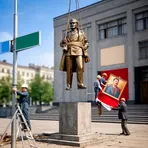
Removing Stalin's power and symbols, like statues and place names, from government and public life
Antonyms

- Formal
The forced introduction of a Soviet-style government with strong central control and harsh rule
Surface Forms
Morphology
de-Stalinization = Stalinization (semi-transparent) = de + Stalin + ization
The word is built by adding de- to the recognizable noun Stalinization, so the sense of reversal or removal is straightforward.
Etymology
De-Stalinization breaks into de- meaning 'remove', Stalin (the Soviet leader Joseph Stalin), and -ization meaning a 'process'. So it means the process of removing Stalin's influence, like changing laws, renaming streets, and taking down monuments.