
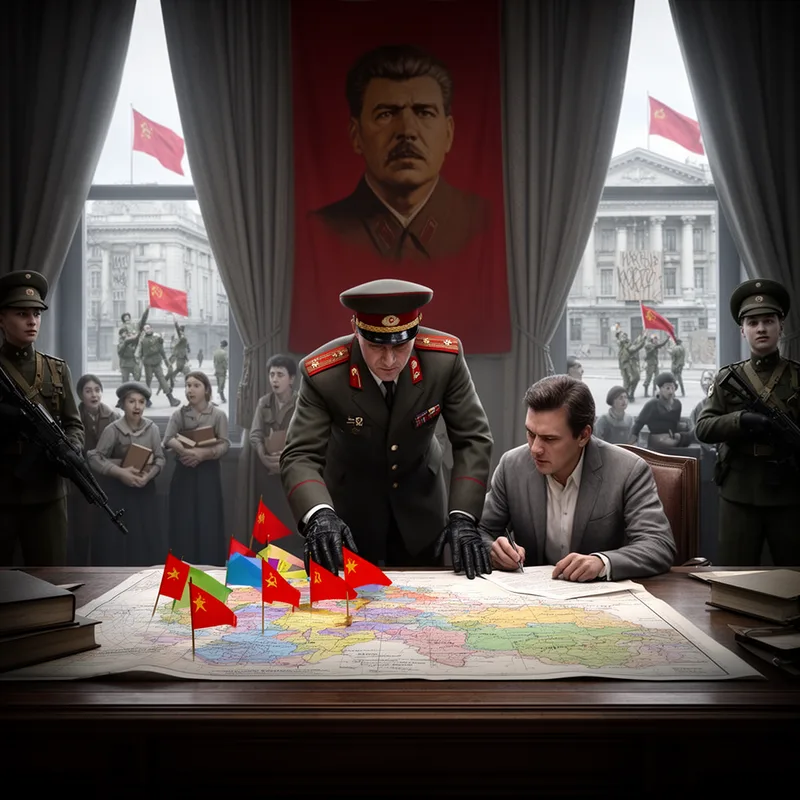
Stalinization
- noun
- /ˌstɑːlɪnaɪˈzeɪʃən/
- Formal
- The Stalinization of agriculture forced farmers to adopt collective practices that limited their independence.
Examples
-
The true reasons for modern stalinization are that the modern youth see the degeneration of the modern national elite and observe the future of Russia becoming very problematic; thus, they begin inevitable revisionism of the past.
Blog text (31) -
Many historians study the impact of Stalinization on Eastern European countries during the Cold War.
-
For the average German taxpayer, a chance of being a member of a super race ruling the world, albeit with a high likelihood of total annihilation, is preferable to the certainty of Stalinization.
Blog text (13) -
The policies of Stalinization led to widespread fear and repression among the Soviet populace.
Synonyms
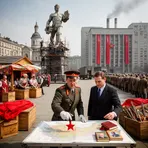
Making a country follow Soviet government, economy, and culture
How Extensive
 806
2.3
806
2.3


- Formal
- Formal
16
6.1
149
3.8
152
3.5
Surface Forms
Morphology
Etymology
The word Stalinization comes from the name of Soviet leader Stalin and the ending -ization, which means 'the process of making or becoming'. So Stalinization means making a country or institution act like Stalin's rule, with tight central control and harsh measures that limit freedom.