
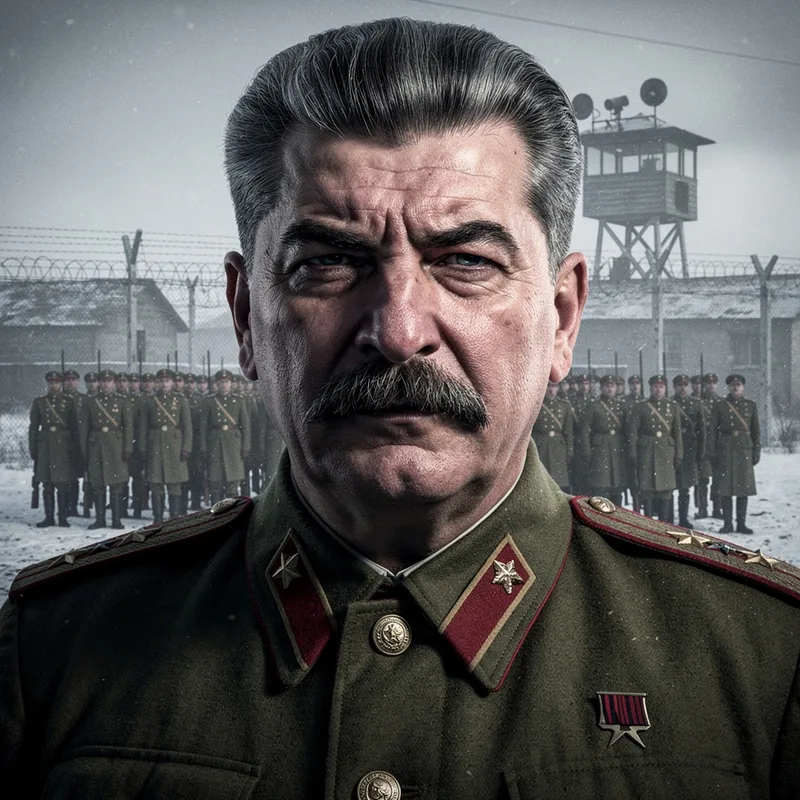
Stalin
 572
5.6
572
5.6

- proper noun
- /ˈstɑːlɪn/
- Churchill and Stalin are asking me what I'm asking you.
- Stalin's purges
- Joseph Stalin
- Lenin and Stalin
Loading YouTube…
Watch on YouTubeI've been reading a lot about Stalin and power.
- I've been reading a lot about Stalin and power.
- I have not died yet, but they, led by Stalin, have already buried me.
- Khrushchev and Stalin were not the same animal at all.
- It was because a spy told Stalin that Roosevelt was sick.
- But the big question remains, why did Stalin do all of this?
- And Stalin died before he could carry out this plot.
- It took him four years to win the leadership struggle after Stalin died, right?
- But it's worth remembering that moral monster that Joseph Stalin was.
- Stalin takes over Russia, but Stalin and Russia help Mao.
- And this idea of Stalin was to do things my way.
- Putin is now Stalin rewritten new spelling.
- OK, so the triangle of evil is Mao, Stalin, Hitler.
- So Ukraine, Stalin, Lenin, they know that Ukraine is a nation.
- And we've talked a lot about this picture thinking for Stalin, for Stalin.
Examples
-
It took him four years to win the leadership struggle after Stalin died, right?
-
Nearly a decade had passed since Stalin's death, and the Repressions were over.
Fiction book (2001) -
But the big question remains, why did Stalin do all of this?
-
Do you know who the first American to find out that Stalin died was?
-
I've been reading a lot about Stalin and power.
-
The West perceived him as bad, and Stalin felt threatened by this shift in attitude among his allies.
Academic text (1999) -
In absolute terms, the famine killed millions, but Stalin had his numbers.
-
He compared people who support social justice to Stalin and Hitler.
-
I studied Marx, Lenin, Stalin and those guys.
-
During his rule, Stalin implemented policies that reshaped the Soviet Union.
Synonyms
Birth name of Joseph Stalin, the leader who ruled the Soviet Union
Surface Forms
Etymology
Stalin was a name he chose for himself; it comes from the Russian word stal ('steel') plus the ending -in. So Stalin means something like 'man of steel' and was meant to sound strong, which helps explain the harsh, powerful image of his rule.