

cystolith
- noun
- /ˈsɪstəˌlɪθ/
- Specialized
- Doctors detected a cystolith during the patient's ultrasound.
Examples
-
Surgical removal may be required when a cystolith becomes too large.
-
Many patients with cystoliths experience painful urination.
-
A cystolith can cause severe pain if it obstructs the flow of urine.
-
The doctor found a cystolith during the examination.
-
Doctors detected a cystolith during the patient's ultrasound.
-
A cystolith can cause severe pain if it obstructs the flow of urine.
-
Many patients with cystoliths experience painful urination.
Synonyms


 1
5.5
1
5.5
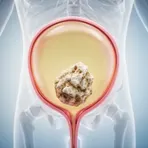
A hard lump of mineral that forms in the bladder

A hard stone that forms in the bladder or tubes that carry urine
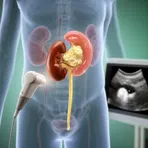
A hard stone that forms in the kidney and can block urine
Surface Forms
Morphology
Etymology
Cystolith comes from two Greek parts: cyst- meaning 'bladder' and -lith meaning 'stone'. So a cystolith is literally a 'bladder stone', a hard piece of mineral that can form in the bladder and cause pain.