

crested wheatgrass
- noun
- /ˈkrɛstɪd ˈwiːtˌɡræs/
- Specialized
- Both Douglas crested wheatgrass and Vavilov crested wheatgrass tolerate drought and have strong root systems that hold soil in place.
Examples
-
Crested wheatgrass is often used to prevent soil erosion in challenging climates.
-
In addition, the Douglas strain provides good forage for both cattle and wildlife because it is very leafy and its leaves remain green longer than those of many other types of crested wheatgrass.
Academic text (1995) -
Both Douglas crested wheatgrass and Vavilov crested wheatgrass tolerate drought and have strong root systems that hold soil in place.
Academic text (1995) -
Farmers choose crested wheatgrass to provide forage for livestock during dry seasons.
-
For effective erosion control, many landowners plant crested wheatgrass along slopes and hillsides.
Synonyms
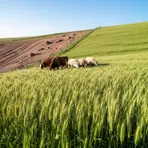
A grass from Eurasia that farmers grow for animal feed and to stop soil erosion

A grass from Europe and Asia that farmers grow for animal feed and to stop soil erosion
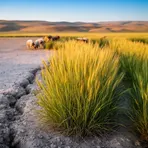
A grass from Europe and Asia grown on dry plains to feed animals and stop soil washing away
Surface Forms
Morphology
crested + wheatgrass
This is a literal compound naming a type of grass: 'crested' (having a crest or tuft) modifies 'wheatgrass' (a grass associated with wheat), so the overall meaning is directly derivable from the parts. It follows a common noun-modifier composition pattern and refers to a specific grass species, so a B1 learner who knows the constituents would readily infer it denotes a particular kind of grass.
Etymology
Crested wheatgrass gets its name from the plant's top, which looks a little like the grain wheat with a small raised part or 'crest'. That's why the name crested wheatgrass refers to this kind of grass that farmers use for grazing and to stop soil erosion.

