

Agropyron cristatum
- noun
- Specialized
- Farmers value Agropyron cristatum as a resilient forage grass for livestock.
Examples
-
Agropyron cristatum is often planted in the Great Plains to prevent soil erosion.
-
The Agropyron cristatum grass is known for its drought resistance.
-
Researchers study Agropyron cristatum for its ability to thrive in drought-prone areas.
-
Farmers often plant Agropyron cristatum for its resilience.
-
Agropyron cristatum is frequently used in agriculture for erosion control in the United States.
-
Many farmers grow Agropyron cristatum to provide nutritious forage for their cattle.
-
Agropyron cristatum has been recognized for its effectiveness in stabilizing soil in hilly regions.
Synonyms
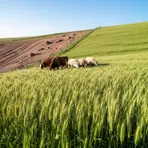
A grass from Eurasia that farmers grow for animal feed and to stop soil erosion
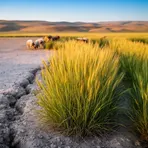
A grass from Europe and Asia grown on dry plains to feed animals and stop soil washing away
Surface Forms
Morphology
Agropyron + cristatum
This is a scientific Latin binomial (genus + species epithet) whose specific meaning (a particular Eurasian grass used for forage and erosion control) depends on domain knowledge rather than ordinary English composition. The second element 'cristatum' is not a common English word and the taxonomic label does not transparently convey the cultivation or ecological properties to a B1 learner, so the overall meaning is not derivable from the parts.
Etymology
Agropyron cristatum comes from old words where Agropyron means 'field wheat' and cristatum means 'crested', so the name gives the image of a wheat-like grass with a small crest. Because this grass is strong and helps hold soil, people plant Agropyron cristatum to feed animals and to stop soil loss, so the name helps you remember it is a hardy field grass that protects the land.

