
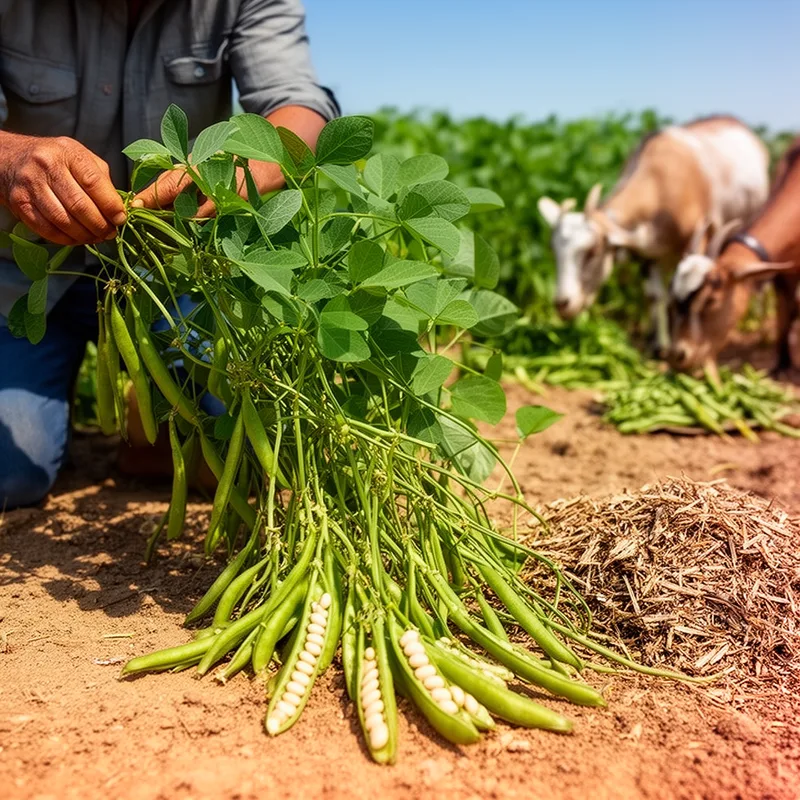
cowpea plant
- noun
- /ˈkaʊˌpiːə plænt/
- Specialized
 :
planta de frijol negro
:
planta de frijol negro
- Farmers often grow cowpea plants for their nutritious seeds.
Examples
-
The cowpea plant thrives in hot, dry climates and requires minimal water to grow.
-
Farmers often cultivate the cowpea plant to enrich the soil with nitrogen.
-
After harvesting, the cowpea plant residue is sometimes used as green manure.
-
The cowpea plant thrives in warm climates.
-
Farmers often cultivate the cowpea plant to enrich the soil with nitrogen.
-
The cowpea plant thrives in hot, dry climates and requires minimal water to grow.
-
After harvesting, the cowpea plant residue is sometimes used as green manure.
Synonyms


 1
7.5
1
7.5
A plant grown in warm places for its seeds or animal feed

A climbing or spreading pea plant grown for edible seeds and animal feed

A climbing plant grown for its edible beans, animal food, and to improve soil
Surface Forms
Morphology
The phrase is fully compositional: 'cowpea' names a particular legume and 'plant' denotes a living botanical organism, so 'cowpea plant' simply denotes a plant that is a cowpea. This noun+noun species-labeling pattern is common in English and cross-linguistically transparent, so a learner who knows both constituents will understand the meaning.
Etymology
Cowpea plant comes from farmers feeding its small pea-like seeds and leaves to cows and other animals. So the parts cow and pea make a clear picture, and the name now means a plant grown for its 'edible seeds' and as 'animal food'.