
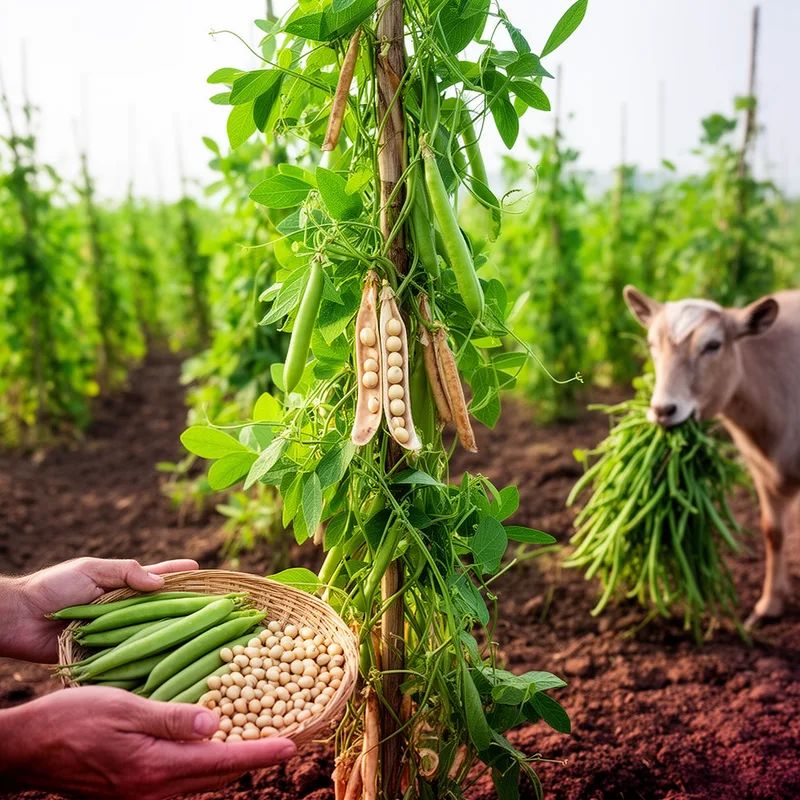
Vigna unguiculata
- noun
- Specialized
- Vigna unguiculata is a valuable crop in African and Asian agriculture, providing protein-rich food and animal fodder.
Examples
-
Farmers often plant Vigna unguiculata as a cover crop to enrich soil fertility between harvests.
-
The leaves and pods of Vigna unguiculata are used for both human consumption and livestock feed.
-
Farmers often grow Vigna unguiculata in tropical climates.
-
The Vigna unguiculata plant thrives in warm soil.
-
Vigna unguiculata is often cultivated for its nutritious seeds, which are a staple food in many regions.
-
In addition to its seeds, Vigna unguiculata is also grown to improve soil health through nitrogen fixation.
-
Many farmers incorporate Vigna unguiculata into their crop rotation for its benefits as a green manure.
Synonyms

 8
3.4
8
3.4

A small pale bean with a black spot that people eat in the American South


 1
7.5
1
7.5
A plant grown in warm places for its seeds or animal feed

A climbing plant grown for its edible beans, animal food, and to improve soil
A spreading annual plant that farmers grow for edible beans and animal feed
Surface Forms
Morphology
Vigna + unguiculata
This is a Linnaean binomial (scientific name) composed of Latin terms functioning as a taxonomic label rather than a compositional English phrase. A B1 learner who knows the listed constituents (one being an unfamiliar Latin adjective) would not be able to derive the plant meaning from them, so the phrase behaves as a fixed proper name with specialized, non-transparent meaning.
Etymology
Vigna unguiculata comes from plant naming: Vigna is the genus name and unguiculata means 'small claw', referring to a little claw-shaped part of the flower. The plant is often called the 'cowpea' because farmers feed it to cows and people, so the name points to this pea-like crop grown for food and animal fodder.