
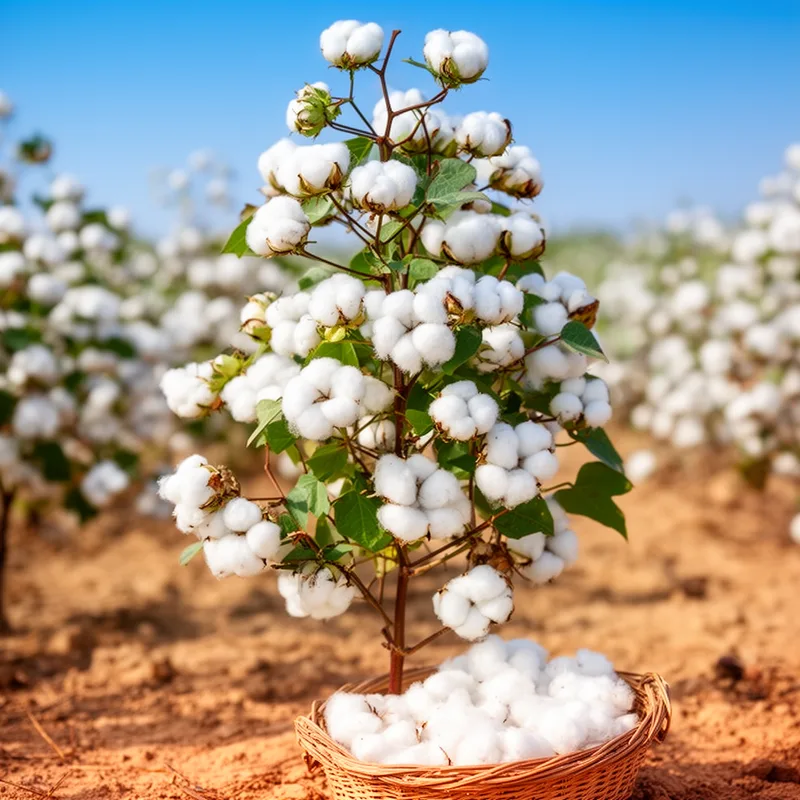
cotton plant
 1
2.1
1
2.1

- noun
- /ˈkɑtən plænt/
- But, by far, most of the interest is focused on a yellow pigment—gossypol—produced by the cotton plant's prolific roots.
- genetically engineered cotton plant
- genetically engineered cotton plant
- resistant cotton plants
Examples
-
On the other side, fields and fields of dark green cotton plants became a sea of milk-white puffs.
Academic text (2016) -
Fields of cotton plants stretched like long green carpets in all directions from where I stood.
Fiction book (1991) -
Leaf photosynthesis increased between 20 and 40 percent in FACE cotton plants.
Academic text (1995) -
In cotton plants, gossypol exists in two different forms, or isomers.
Academic text (2005) -
Analysis has shown that these resistant cotton plants will even control the bollworm on nearby non-engineered plants.
Academic text (2012) -
Typically, farmers use a moldboard plow to kill both sorghum and cotton plants.
Academic text (1997) -
Chopping cotton consisted of chopping the weeds from around the young cotton plants so the sun could reach the cotton plants.
Blog text (34) -
The cultured roots provide Young with an unfettered view of how cotton plants might fend off a nematode attack.
Academic text (2005) -
Similarly, on farms throughout China, farmers have been growing a cotton plant that is engineered to be resistant to the destructive pest cotton bollworm.
Academic text (2012) -
The cotton plants in the field were ready for harvest, their bolls bursting with soft fibers.
Synonyms
 126
1.0
126
1.0
A bushy plant with white fluffy seed pods grown for soft fibers used to make cloth

A cotton plant that makes very long, soft fibers grown on coastal islands

A small tree or bush that people grow for pretty flowers and soft fibers

A wild bush with white soft fibers around its seeds used to make cloth
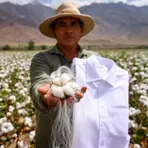
Cotton with long soft fibers grown in Peru and used for soft, strong clothes

A cotton plant with short grey fibers that stick to its seeds and are hard to remove
Surface Forms
Morphology
The meaning 'a plant that produces cotton' is directly and compositionally derived from 'cotton' (the fiber-producing crop) + 'plant' (a photosynthetic organism). This simple noun–noun compound follows a common cross-linguistic naming pattern and would be immediately understandable to a B1 learner who knows both constituents.
Etymology
Cotton plant comes from the simple idea of a plant that grows cotton. People named it after the white, fluffy bolls on the plant, so today cotton plant means the bush or small tree that produces 'cotton'.